EVERY year, millions of Pakistanis undertake their respective journeys to the various Sufi shrines located across the land; dusty tombs adorned with green flags, perfumed incense, and the rhythmic echoes of qawwali. They do so to seek solace, healing, fertility and just about everything; even the langar holds a certain value for many. What they often have is a deeply spiritual experience. What they rarely notice is the multi-million-rupee business humming beneath the surface.
In Punjab and Sindh, the culture of darbars (shrines), peers (spiritual guides), mureeds (disciples) and urs (annual saint festivals) has morphed into an economic ecosystem — part religion, part feudalism, and part performance art. Some of Pakistan’s most popular shrines draw crowds in the hundreds of thousands, and operate on a scale that rivals small municipalities. With ample donations, landholdings, and even political clout, they are no longer just religious institutions; they are thriving enterprises.
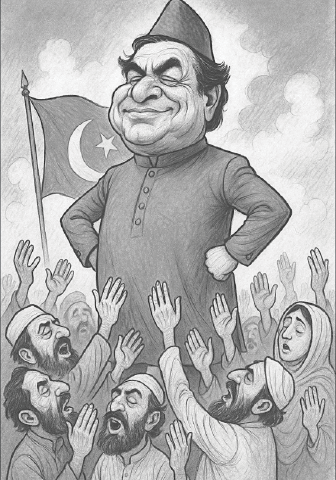
The model is simple, but effective. A revered saint dies. His tomb becomes a shrine. Over time, a hereditary caretaker, the sajjada nasheen, inherits control, along with a loyal base of mureeds. They offer chanda (donations), livestock, or gold jewellery in exchange for blessings, amulets or advice. The saint’s charisma becomes a revenue stream. In some cases, so does his political endorsement.
Many shrines own vast tracts of land, granted by Mughal emperors or later expanded by colonial administrators keen to keep the countryside pacified. Today, these lands are often leased or cultivated for profit. During urs, the shrine hosts thousands, selling food, allocating stall space, and collecting donations. Qawwali troupes, vendors and even beggars pay unofficial fee to set up shop. It is spiritual capitalism with a distinctly South Asian flair. Even in death, saints command devotion; their custodians, meanwhile, command loyalty, land and leverage.
The state, for its part, vacillates bet-ween reverence and helplessness. Some provincial governments manage shrines through Auqaf departments, ostensibly to curb exploitation.
In practice, regulation is weak, audits are rare, and political interference is frequent. Peers often serve as vote-brokers in rural constituencies, trading their flock’s ballots for development funds or immunity from oversight. A few even run for office, delivering both sermons and seats.
Not all shrine operators are cynical profiteers, of course. Many still feed the poor, mediate local disputes, and offer comfort in a society short on mental healthcare. For Pakistan’s rural poor, where state services are patchy and modern medicine unaffordable, the shrine remains a place of hope, however illusory.
But it is a fact that the shrine culture reinforces fatalism, deters scientific thinking, and legitimises spiritual ex-tortion. Attempts at reform rarely go far. Any serious move to regulate shrines invites political backlash and accusations of irreligiosity.
Pakistan’s Sufi heritage is rich, poetic and deeply embedded in its larger cultural identity. However, when spirituality becomes a spectacle, and devotion becomes a business, the line between faith and commerce blurs dangerously.
Iqbal Hussain Baacha
Peshawar
Published in Dawn, August 9th, 2025