
Being Pakistani isn’t just something written on a passport; it’s something that lives in us and we belong to. It’s also not about grand slogans or dramatic displays. It’s about the small things we live every day. The way we speak, dress and carry ourselves. The way we feel when we hear a familiar song or smell food that reminds us of our home. It’s in our language, humour and lifestyle.
It’s not something we have to prove, it’s just there, in who we are. It completes us and turns us from individuals into a nation, with a strength that binds us beyond our differences.
As we grow up, we start to understand what this country has been through. We hear and read stories of people who fought for it, some with weapons, some with just their voices. Because not all of them were on battlefields, many were working behind, backing the men in the war zone with their writing, singing and speaking up for them. Their words carried weight.
Because words matter!
Yes, kids. As you grow old, you will understand that words carry weight; they hold people together when everything else is falling apart. And I’m not just talking about any words, I’m talking about “those” words — the ones written and sung during times of war and were later on meant to uplift and ignite patriotic passion, and increase courage and determination. These words were meant to lift a broken nation, give strength to soldiers and hold up the families who were silently fighting their own battles back home.
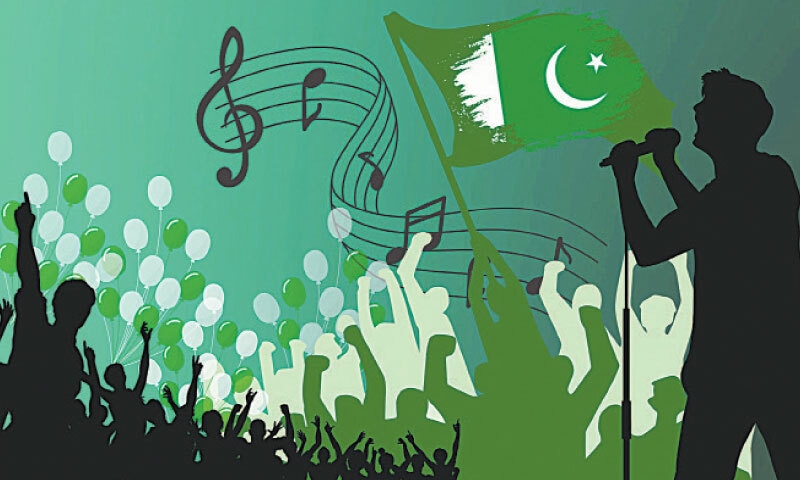
When you hear a patriotic song, do you feel something special in your heart? That’s not just music — it’s love for your country. Let’s discover how songs and poems became the strength behind Pakistan, lifting hearts and uniting us all
These words reached the mothers who kissed their sons goodbye, the wives waiting without sleep, the children holding onto memories. They weren’t empty lyrics; they were actually promises to the nation that their sacrifice meant peace for the nation. And the families were holding on to the memories and the belief that if their loved ones became martyrs, they were still strong. Still standing in honour. See how strong the words meant to both sides?
Honestly, the poets and singers weren’t just creating pieces of writing. They were fighting too. Their voices crossed mountains and deserts, camps and cities. They reminded soldiers they weren’t alone. They reminded families they were not forgotten. So the songs and poems weren’t background songs. They acted as fuel. Because words, when chosen with purpose, don’t just speak, they carry, they lift.
Even now, when a patriotic song plays, don’t you feel it? That strange pull in your chest? It’s like something stirs. You feel proud. You remember. You want to do something that matters. And yes, I’ve always felt that patriotic music doesn’t just entertain; it awakens something in us. Our hidden patriotic spirit speaks directly to the soul.
This Independence Day, let’s reflect on the powerful role music plays, how it uplifts, unites and ignites the core of us.
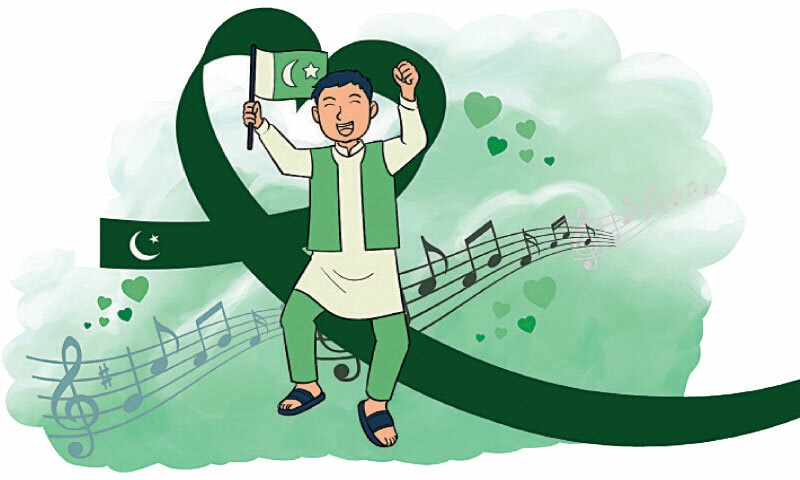
Over the decades, our poets, writers and singers gave courage to those on the front lines. Their voices echoed through towns, across mountains and fields, reminding the fighters that the nation stood with them. Their songs and poems worked as fuel that sparked bravery and stitched the country together in shared emotion.
Just think about that moment when you’re watching a cricket match, Pakistan is playing against another country, and in the background, the song Hai Jazba Junoon to Himmat na Haar by Junoon (the band) starts playing. Can you really sit still? Doesn’t your chest feel like it might burst? You want to stand up and shout for Pakistan because there’s this sudden rush of emotions in which all you want is to cry, scream and smile simultaneously.
It’s not just a song, it’s an emotion. It’s the love for your beloved country unleashed in the very moment — and all you want is for your country to shine in every corner of the world. The music just doubles the emotions. It doesn’t just remind us of who we were; it helps us imagine who we ‘can’ be.
That said, Pakistan is home to some of the best poets and writers in the world. Take Dr Allama Iqbal, for example. Long before there was even a proper independence movement, he was writing about a future where Muslims had a land to call their own. People didn’t need long speeches. One couplet from Iqbal was enough to shake them awake.
And then came Faiz. Faiz Ahmed Faiz wasn’t just a poet, nor did his poetry just paint a rosy picture. It also showed the struggles. The disappointment. The unfulfilled dreams. But even in his sombre lines lay a hope. His words, Hum dekhenge… is still played, especially when someone dares to speak the truth or stand up against injustice.
Songs that shape us
Most of us don’t even realise when it happens, how deeply music becomes part of our identity. For example, our parents have grown up listening to songs like Sohni Dharti Allah Rakhe, Jeevay Jeevay Pakistan, Aye Watan k Shaheedo, and Aey Pak Watan Tujhe Mera Salaam, and without even knowing the meaning of them, these very songs became the core memory for some of us in childhood too.
The legendary Madam Noor Jehan is remembered as the voice of Pakistan. During the wars of 1965 and 1971, she was the voice and heart of the whole nation. Her songs gave courage to soldiers at the front and brought tears to the families back home.
Moreover, legends like Mehdi Hassan and Nusrat Fateh Ali Khan poured their soul into their voices and stirred the core of the nation, reminding everyone of their roots and their national identity.
But some songs become more than just memories; they run in our veins and remain evergreen. It’s been over three decades since this iconic patriotic song was released; yes, you guessed it right, Vital Signs’ Dil Dil Pakistan.
Honestly, that song became more than just something you’d hear on the radio or TV; it turned into an emotion. Even today, when it plays, you can’t help but sing along. And it’s not just us; even little kids who’ve barely started school know it. You say “Dil Dil…” and they’ll finish with “Pakistan.” That song is becoming a core memory for every generation.
Later, Junoon (the band) changed everything. They woke the youth up with their mix of powerful Sufi poetry and electric guitars and gave young people something bold and meaningful to believe and hum with. Their music was about unity, purpose and hope for a better future.
At the same time, other artists with their powerful vocals and heartfelt lyrics continued to stir the nation. For example, Shehzad Roy blended social awareness with patriotic pride in Hum Aik Hain while Atif Aslam’s soul-stirring rendition of Jee Lay Har Pal brought fresh emotion to a classic. Ali Zafar, too, contributed beautifully with tracks like Jann Dey Dein ge, Haroon’s Dil se Pakistan and legendary Shafqat Amanat Ali’s Tu Salamat Watan, but this was not all. More artists like Abrar-ul-Haq, Jawad Ahmad, Ayesha Omar, Rahat Fateh Ali Khan added their energetic voices to the heartfelt lyrics, giving patriotism a catchy, youthful beat.
There’s a beautiful balance in all of these artists’ songs where tradition meets today’s vibe. And that’s why young people still connect with it. The sound has evolved, but the message remains the same.
Music speaks when
people can’t…
Not everyone gets a chance to speak freely, especially in a country where poverty, inequality and social pressure often silence people. But music? It cuts through all of that; it doesn’t need the permission or stage. It simply finds its way straight to homes, streets and the hearts. There is no stopping it. It becomes a voice for those who stay silent out of fear and strength for those who feel powerless.
Whether it’s a poem written decades ago or a song that just came out last week, they’re not just collections of words and lyrics. If by listening to them you feel something deep inside your heart, it means they have touched a real part of you.
They remind you what it truly means to be Pakistani and the pride that comes with belonging to this land.
Published in Dawn, Young World, August 9th, 2025