Indian army searches for scores missing after deadly Himalayan flood
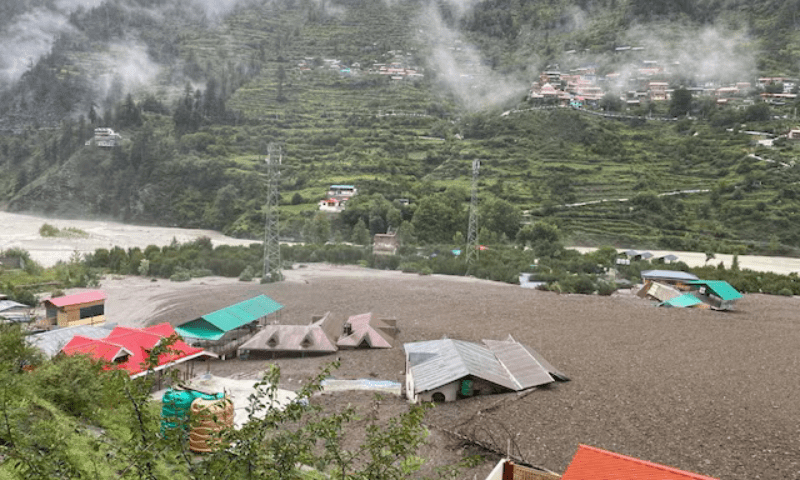


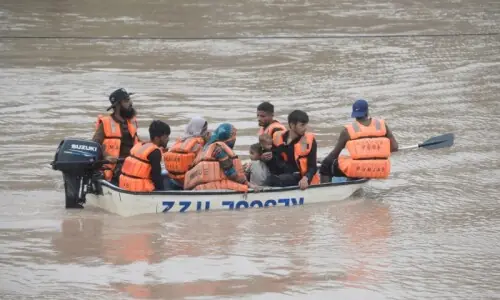
The Indian army brought in sniffer dogs, drones and heavy earth-moving equipment on Wednesday to search for scores missing a day after a deadly Himalayan flash flood.
At least four people were killed and around 100 are unaccounted for — including 11 soldiers — after a wall of muddy water and debris tore down a narrow mountain valley, smashing into the town of Dharali in Uttarakhand state.
“Additional army columns, along with army tracker dogs, drones, logistic drones, earthmoving equipment etc, have been moved… to hasten the efforts”, the army said today.
Military helicopters were working to bring in “essential supplies, medicines and (for the) evacuation of the marooned”, it added.
Uttarakhand State Chief Minister Pushkar Singh Dhami said the flood was caused by an intense “cloudburst” of rain, and that rescue teams had been deployed “on a war footing”.
Videos broadcast on Indian media showed a terrifying surge of muddy water sweeping away multi-storey apartment blocks in the tourist region on Tuesday afternoon.
Several people could be seen running before being engulfed by the dark waves of debris that uprooted entire buildings.
Minister of State for Defence Sanjay Seth told the Press Trust of India (PTI) news agency late on Tuesday that he had reports of “four deaths and around 100 people missing”.
‘Extreme event’
Torrential monsoon rains continue to pour down.
“Residents have been moved to higher reaches in view of rising water levels due to incessant rains”, the army added.
Government weather forecasters said on Wednesday that all major rivers in Uttarakhand were flowing above the danger mark.
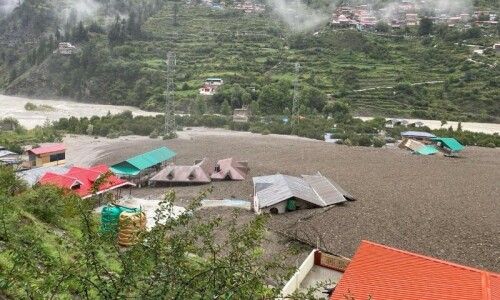
Images released by the army, taken from the site after the main torrent had passed, showed a river of slow-moving mud.
A large part of the town was swamped by mud, with rescue officials estimating it was 15 metres deep in places, swallowing some buildings entirely.
Deadly floods and landslides are common during the monsoon season from June to September, but experts say climate change, coupled with urbanisation, is increasing their frequency and severity.
The UN’s World Meteorological Organisation said last year that increasingly intense floods and droughts are a “distress signal” of what is to come as climate change makes the planet’s water cycle ever more unpredictable.
Expert hydrologist Manish Shrestha said the 270 millimetres of rain within 24 hours reported in the flood zone “counts as an extreme event”.
Shrestha, from the Nepal-based International Centre for Integrated Mountain Development, said such rain in mountains has a “more concentrated” impact than on flatter lowlands.
“Such intense rainfall events are becoming increasingly common, and could be linked to climate change”, he said.