ISLAMABAD: A first ever ‘UN Global Risk Report’ has identified eleven risks from across political, technological, societal and environmental domains, describing these as ‘global vulnerabilities’ for which the world is not prepared.
The results based on a survey of more than 1,100 leaders from government, industry, civil society and academia across 136 countries, paints a stark picture of mounting vulnerabilities that threaten to overwhelm international institutions and destabilise societies.
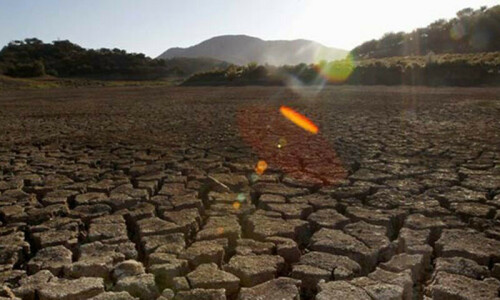
Environmental risks, including climate change inaction, large-scale pollution, and biodiversity loss, dominate the list of concerns, with the report warning that these crises are both highly likely and potentially catastrophic.
Yet, the report also highlights a worrying lack of preparedness for emerging threats such as space-based events, pandemics, and the rapid advance of frontier technologies.
The report concludes with a call from UN secretary-general for the immediate creation of a task team to strengthen the organisation’s capacity to address risks in the information ecosystem.
Environmental challenges and disinformation top list of vulnerabilities
The UN Department of Global Communications has already begun work to assess the impact of mis- and disinformation on the delivery of the UN’s mandate. The report’s authors warn that global vulnerabilities are being exacerbated by weak governance, a lack of political consensus, and the erosion of state sovereignty.
“One thing is clear when looking out on this landscape of global risk: ultimate responsibility lies with today’s leaders,” UN’s Under-Secretary-General for Global Communications Melissa Fleming said.
“They face a stark choice: breakdown, or break through to a better tomorrow — one in which we all live in peace, dignity and equality on a healthy planet.”
The survey found that multilateral institutions are least prepared to address five critical risks: outer space, cybersecurity breakdowns, the proliferation of non-state actors, mis- and disinformation, and the erosion of state sovereignty.
Published in Dawn, August 4th, 2025