• Traders stage sit-in at dry port against federal taxes
• Stranded Chinese nationals protest against road blockade
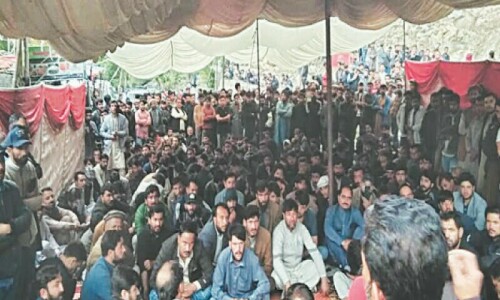
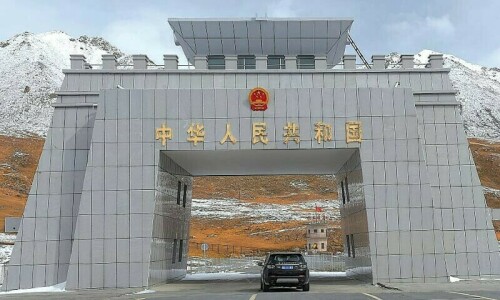
GILGIT: Traders in Gilgit-Baltistan (GB) on Monday blocked Sost dry port, halting all trade and travel between Pakistan and China to protest inaction on federal taxes and demand the release of hundreds of shipping containers they say have been stalled for months.
The protest on the Karakoram Highway, which began last week, has paralysed the regional economy and stranded travellers, including Chinese nationals who also staged a protest demanding passage into China through Khunjerab pass.
The demonstration is led by the Pak-China Tajeer Etihad Action Committee, a coalition representing importers, exporters, customs agents, and chambers of commerce from across Gilgit-Baltistan.
Protesters have blocked the port’s main gate and are vowing to continue their sit-in until their demands are met.
At the heart of the dispute are 280 shipping consignments imported from China that have been stranded at the Sost Dry Port for 10 months.
The traders said the goods, stored in an open area, have been damaged by recent rains, with many items expiring.
They claim to be facing daily port charges and billions of rupees in losses.
Protesters warned that the exploitation of GB’s people would no longer be tolerated, saying that they would expand the protest if their demands remain unresolved.
The traders are calling for the immediate clearance of the containers based on customs duties alone, exempting them from other federal taxes.
They argue that under the 1985 Pakistan-China border agreement and Gilgit-Baltistan’s disputed constitutional status, the region’s residents are exempt from federal sales and income taxes.
According to the protestors, GB has disputed constitutional status, and representation in National Assembly and Senate of Pakistan and no taxation without representation is recognised law.
The traders criticised the Federal Board of Revenue (FBR), blaming new trade policies introduced last December for disrupting their primary source of income and triggering an economic crisis.
They demand the removal of cases against local traders, claiming that imposing taxes like sales and income tax on importing goods from China is illegal.
With no major industrial base, thousands of transporters, hotel owners, shopkeepers, and labourers in the mountainous region depend on trade with China.
The protest has garnered support from high-level regional officials and a joint committee of various organisations has been formed to coordinate and expand the protest.
GB Governor Syed Mehdi Shah sent a letter to Pakistani President Asif Ali Zardari requesting his intervention.
Chief Minister Haji Gulbar Khan also took notice of the protest and said he would take up the matter with the federal government.
Published in Dawn, July 29th, 2025