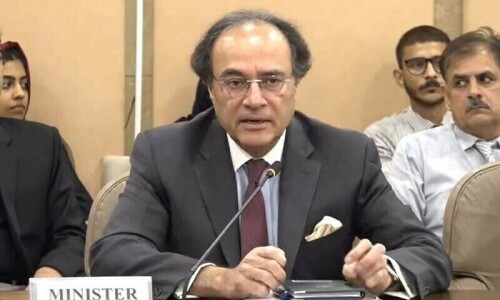
THE meeting between Foreign Minister Ishaq Dar and US Secretary of State Marco Rubio has sparked cautious optimism that Islamabad and Washington may finally be turning a corner in their often-fraught relationship. The two sides appear ready to recalibrate their economic and strategic ties after years of diplomatic chill and disengagement.
The meeting between the top diplomats of the two countries is being widely interpreted as a formal culmination of a discreet thaw in bilateral ties — set in motion by the lunch President Donald Trump recently hosted for Field Marshal Asim Munir at the White House. It would not be wrong to say that Mr Trump’s gesture helped lay the groundwork for the resumption of high-level diplomatic momentum between the two nations.
At Friday’s meeting, the two sides are said to have discussed several issues — trade, investment, counterterrorism cooperation, critical minerals and mining, and the recent Pakistan-India clash, which the US president takes credit for stopping.
Indeed, Pakistan appears keen on securing continued US engagement in South Asia, particularly for help in the resolution of the long-standing Kashmir dispute. Yet, it is clear from Mr Dar’s remarks, following his meeting with Mr Rubio, that Islamabad is now prioritising a more durable economic partnership with Washington.
“We reaffirmed our commitment to the long-term Pakistan-US partnership, with renewed focus on economic, trade, investment, IT/AI and counterterrorism cooperation,” he posted on X. Speaking at the Atlantic Council, he revealed that a trade deal over the steep 29pc reciprocal tariffs imposed on Pakistan as part of President Trump’s Liberation Day tariffs was “very close”.
“It’s not going to be months, not even weeks — I would say [just] days,” he said. Mr Rubio, for his part, said the discussions focused on expanding bilateral trade and advancing collaboration in the critical minerals sector — an area of growing strategic interest for both sides.
The US remains Pakistan’s single largest export destination, and American firms hold the biggest portfolio of fixed investment across key sectors of the country’s economy, underscoring the long-term strategic importance of enhanced trade and investment ties between the two nations.
That the latter appear willing to reset their ties around economic cooperation is encouraging and marks a departure from the days of security-centric engagements. It should lay the foundation for an enduring partnership. It must also be emphasised that the ongoing discussions over higher reciprocal tariffs afford policymakers a unique opportunity to build the future trajectory of bilateral ties on the basis of broader economic cooperation.
A partnership built on the long-term economic interests of the two countries should go a long way in deepening bilateral cooperation in other important areas, such as counterterrorism, as well.
Published in Dawn, July 27th, 2025