ISLAMABAD:Prime Minister Shehbaz Sharif, while chairing a meeting regarding water scarcity in the twin cities of Rawalpindi and Islamabad on Thursday, directed the authorities concerned to take immediate steps to ensure the provision of adequate water to citizens.
During the meeting, the task force formed in May on water issues, headed by Interior Minister Mohsin Naqvi, briefed the prime minister about a proposed water board, which will deal with proposed projects mainly Ghazi Barotha project for brining 100 million gallon of water per day each for the two cities.
He was told that the proposed Water Board, which sources said was likely to be named as Potohar Water Management Board, will be responsible for managing existing and future water reserves, overseeing household water distribution, coordinating stakeholders’ access and implementing relevant measures.
Mr Sharif directed that a committee should finalise the formation of the board for Islamabad and adjoining areas.
Task force formed in May on water issues briefs meeting about setting up of water board
He directed the CDA to prepare a plan for recharging underground water reserves using rainwater.
The task force briefed the PM about the outcome of its two meetings on the water issue. He also directed that the concerned authorities should develop a system to prevent contamination of Rawal Dam due to sewage from adjacent settlements. He also ordered the establishment of a system to treat sewage discharged from illegal and informal settlements. Moreover, a system should be devised to supply the approved quota of water from Tarbela, Khanpur and other dams to consumers in Islamabad.
He also took a serious note of the contamination of small dams’ water by nearby societies.
During the meeting, proposals and plans for the construction of several dams in surrounding areas and their water supply systems to Islamabad were also presented.
The proposed board will be an independent body and will involve all stakeholders, including CDA, Rawalpindi Development Authority (RDA), Cantonment Board, Defence Housing Authority and the Islamabad Capital Territory Administration. In its recent meeting, the task force had agreed that water was the major issue in both the cities.
It was agreed that the Tarbela water scheme would be launched soon for bringing 200 mgd of water for the twin cities. The sources said the task force wanted to get the Tarbela project completed within three years to avoid a serious water crisis in the twin cities.
It is relevant to note that Islamabad has been witnessing a rapid increase in its population, but no new water source has been added to the system during the last three decades. Currently, CDA is supplying only 62 mgd mainly from its three main sources - Simly and Khanpur dams and tubewells.
The rural population is dependent either on bore water or small water schemes of the district government.
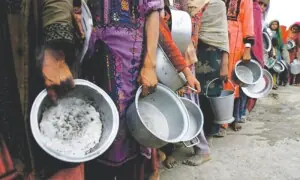
According to documents available with Dawn, Islamabad’s water demand is 283 mgd (246 mgd actual and 37mgd distribution losses). There is a demand-supply gap of more than 175 mgd. The shortfall is being managed through rationing, supplying water intermittently and on alternate days in some areas.
Published in Dawn, July 18th, 2025