ISLAMABAD: Minister for Planning, Development and Special Initiatives Prof Ahsan Iqbal has underscored the urgency of addressing the growing threats of misinformation and disinformation.
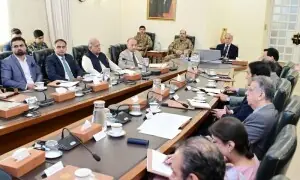
He was speaking at a national dialogue on media and information literacy framework here on Saturday.
He committed to present the media and information literacy framework developed through this dialogue to the government for necessary action.
The event was organised by Unesco in collaboration with Media Foundation 360, SZABIST University Islamabad and the Department of Digital Media, University of the Punjab, as part of Unesco’s initiative to strengthen Pakistan’s media and information literacy policy framework at Idara Faroogh-i-Qaumi Zuban.
Unesco National Programme Officer Hamza Sawati highlighted the critical importance of developing a national MIL framework. He reaffirmed Unesco’s ongoing commitment to promoting media literacy, critical thinking and responsible digital engagement, especially in today’s rapidly evolving information landscape.
Dr Savera Mujib Shami, Research Lead of the project and Chairperson of the Department of Digital Media at Punjab University, shared the key recommendations gathered from extensive provincial and district-level consultations held across the country.
Khusro Pervaiz Khan, Head of SZABIST University Islamabad campus, underlined the role of academic institutions in shaping media-literate, critically thinking citizens.
Political Counsellor at the Canadian High Commission Daniel Arsenault commended the efforts undertaken to develop the policy framework.
The dialogue featured reflections from prominent senior media professionals such as Asma Shirazi, Mohammad Malick, Amir Ilyas Rana, Hamid Mir, former president PFUJ Nawaz Raza, Faisal Zahid Malik and former executive director Pakistan Institute for Parliamentary Services (PIPS) Zafarullah, and Pakistan Federal Union of Journalists (PFUJ) President Afzal Butt.
They described the initiative as a timely and crucial step toward combating disinformation and promoting responsible media consumption. The participants highlighted the need for broader social change, including improving primary education systems and addressing the role of older generations in spreading misinformation.
They also stressed on the responsibility of journalists and media professionals in leading the national conversation on digital literacy and fostering informed citizenship.
The recommendations and insights collected during the session are expected to inform the development of a comprehensive MIL policy, aimed at enhancing digital literacy, reinforcing democratic values, and building societal resilience against misinformation and disinformation.
Published in Dawn, July 13th, 2025