Japan plans ‘world first’ deep-sea mineral extraction
Japan will from January attempt to extract rare earth minerals from the ocean floor in the deepest trial of its kind, the director of a government innovation programme said on Thursday.
Earlier this week, the country pledged to work with the United States, India and Australia to ensure a stable supply of critical minerals, as concern grows over China’s dominance in resources vital to new technologies.
Rare earths — 17 metals difficult to extract from the Earth’s crust — are used in everything from electric vehicles to hard drives, wind turbines and missiles.
China accounts for almost two-thirds of rare earth mining production and 92 per cent of global refined output, according to the International Energy Agency.
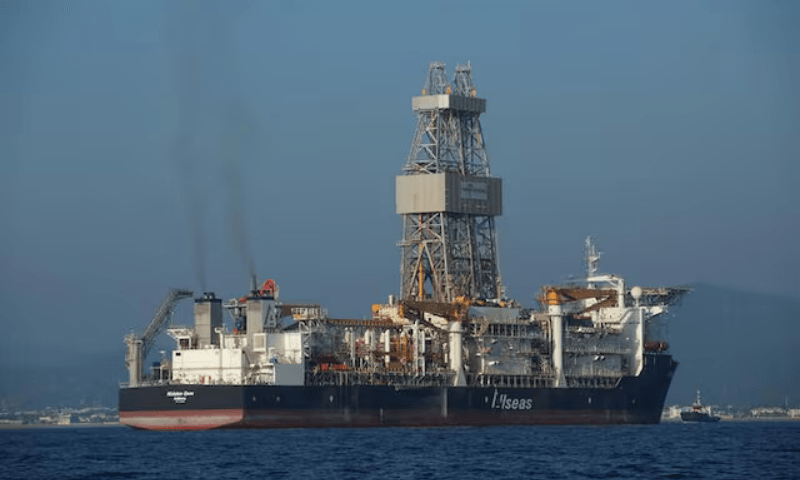
A Japanese deep-sea scientific drilling boat called the Chikyu will from January conduct a “test cruise” to retrieve ocean floor sediments that contain rare earth elements, said Shoichi Ishii, director of Japan’s Cross-ministerial Strategic Innovation Promotion Programme.
“The test to retrieve the sediments from 5,500 metres water depth is the first in the world,” he told AFP.
“Our goal … of this cruise is to test the function of all mining equipment,” so the amount of sediment extracted “doesn’t matter at all”, Ishii added.
The Chikyu will drill in Japanese economic waters around the remote island of Minami Torishima in the Pacific — the easternmost point of Japan, also used as a military base.
Japan’s Nikkei business daily reported that the mission aims to extract 35 tonnes of mud from the sea floor over around three weeks.
Each tonne is expected to contain around two kilogrammes of rare earth minerals, which are often used to make magnets that are essential in modern electronics.
Deep-sea mining has become a geopolitical flashpoint, with anxiety growing over a push by US President Donald Trump to fast-track the practice in international waters.
Beijing has since April required licences to export rare earths from China, a move seen as retaliation for US curbs on the import of Chinese goods.
Environmental campaigners warn that deep-sea mining threatens marine ecosystems and will disrupt the sea floor.
The International Seabed Authority, which has jurisdiction over the ocean floor outside national waters, is meeting later this month to discuss a global code to regulate mining in the ocean depths.