

This year, Pakistan’s food security landscape is shaped by two critical factors: a notable shortfall in wheat production and the withdrawal of both federal and provincial governments from wheat procurement. Previously, 5 to 7 million tonnes (MT) of wheat were procured annually to maintain strategic reserves for food security emergencies and to serve as buffer stocks, which were released to flour mills as needed to stabilise market prices.
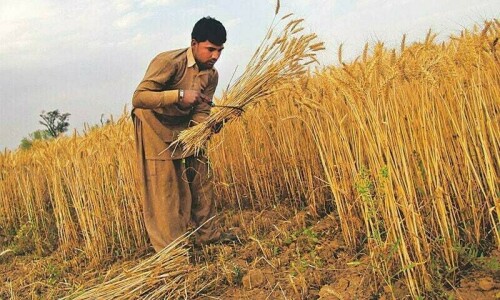
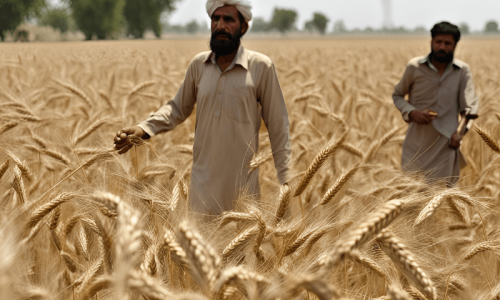
Wheat in Pakistan is primarily used for food, feed, and seed. In 2024–25, Pakistan harvested only 28.98 MT of wheat from 22.5 million acres — well below the 33.58 MT target set for 2024–25 and last year’s production of 31.8 MT. This year’s production falls short of meeting even the basic food requirements of the country’s 255m people, based on an annual per capita consumption of 115 kilograms (Household Income and Expenditure Survey, 2018–19).
Additionally, 1.0 to 1.2 MT of wheat are needed as seed for the next crop. Apart from these core needs, wheat is also used in livestock and poultry feed, often as a cost-effective substitute for maize. Furthermore, Pakistan’s wheat supplies support a significant portion of Afghanistan’s population — an element typically factored into national demand estimates.
When all demands — human consumption, seed requirements, feed use, and regional needs — are weighed against this year’s production and the carryover stock of around 5 MT held by federal and provincial governments, the available stock appears barely sufficient to meet national needs, leaving little to no margin for miscalculation or wastage.
Lack of government intervention in the coming year exposes wheat to a series of issues, including artificial price manipulation, hoarding, and a potential shortage
This year, wheat market deregulation and the governments’ exit from procurement have raised new concerns that could potentially undermine national food security — the consistent supply of wheat flour to the public at affordable prices, under all conditions.
First, under an August 2022 decision by the Economic Coordination Committee, the federal government is obligated to maintain a strategic reserve of 2 MT on top of total national requirements. Although the federal and provincial governments currently hold carryover stocks, they are gradually offloading them, primarily due to deteriorating quality.
With the wheat market now deregulated, the government has no clear plan to replenish and maintain strategic reserves once existing stocks are exhausted — exposing a serious gap in food security planning. Notably, in the event of a food emergency, Pakistan requires 40–45 days to import wheat from international markets. It may take longer amid geopolitical tensions or regional conflict.
The government sought to strengthen the Electronic Warehouse Receipt System (EWR) to enhance formal wheat storage, which could support the building of strategic reserves. However, Naymat Collateral Management Company Limited remained its sole operator for years, with no other players showing interest. Resultantly, EWR storage capacity (for all crops) stayed below 200,000 tonnes nationwide, and wheat uptake was minimal — only a few hundred tonnes. Moreover, the Punjab government’s much publicised Rs100 billion (interest-free) wheat financing programme to expand formal storage failed to materialise.
Second, even in a deregulated regime, the government remains responsible for ensuring the stable supply of essential commodities like wheat at fair prices. In developing countries like Pakistan, agricultural commodity markets lack transparency and rarely function efficiently. Therefore, assuming that deregulated markets will self-correct is overly optimistic.
Hence, without buffer stocks from this year onwards, how will the government maintain market stability or ensure consistent supply? How can it compel private stockists to release wheat when needed? The lack of reliable data on stockholders and their inventories only deepens the risk.
In reality, the abrupt shift from a government-controlled to a fully deregulated wheat market is a serious policy misstep. It has exposed 255m people to immense market uncertainty, with the government itself unclear on how the market would respond. Such a transition should have been phased over 2–3 years, allowing the private sector-led system to take root while gradually scaling down public buffer stocks.
Third, from this year, wheat storage by private stockists — previously penalised under anti-hoarding laws — is now permitted. As a result, a large number of stockists, both formal and informal, acquired massive quantities when prices fell to Rs2,100 from Rs2,200 during the seasonal glut. Many of these players — often influential and politically connected — have deep pockets and high capacity to hold stocks for extended periods, restrict supply, and maximise profits. This poses serious risks of artificial shortages and price manipulation, especially later in the current crop year. It seems that a new wheat mafia may soon emerge, much like those operating in other sectors.
Finally, following deregulation, wheat consumption has risen. Livestock and poultry feed mills — previously barred from procuring wheat to safeguard supplies for human consumption — were allowed to purchase this year. They acquired extraordinarily large quantities of low-priced wheat in anticipation of higher maize prices. This will surely disrupt the country’s overall supply and demand balance and further strain already tight reserves.
In conclusion, Pakistan urgently needs sound policymaking in the agriculture sector as well as efficient commodity markets — both of which rely on credible, timely data and real-time information on stocks and supply chains. To address this critical gap, the government must strengthen its data collection systems and prioritise the development of a digital platform requiring millers, stockists, EWR operators, and other key stakeholders to disclose their inventory levels in real time.
Khalid Wattoo is a development professional and a farmer, and Dr Waqar Ahmad is a former associate professor at the University of Agriculture, Faisalabad
Published in Dawn, The Business and Finance Weekly, June 30th, 2025