
The government of Balochistan, in its FY26 budget, has established the Climate Change Fund with an initial allocation of Rs500 million to provide financial support to climate change initiatives in the province.
The decision of the current government to establish the Climate Change Fund is a commendable decision to invite donors and international partners to come forward and fund initiatives targeting climate change mitigation, adaptation and sustainable development.
The development in Balochistan truly needs to be aligned with the three main pillars of the Sustainable Development Goals (SDGs), ie social inclusion, economic development and environmental protection. This part of the country covers almost 45 per cent of the overall landmass, with two-thirds of the country’s coastline. The province has consistently been vulnerable to natural hazards such as earthquakes and floods and has also suffered from severe and prolonged droughts.
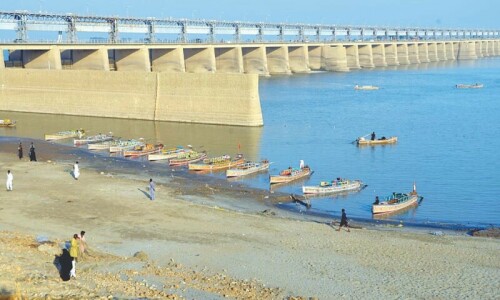
Since 1998, there have been persistent droughts throughout the province. According to the Balochistan Drought Reassessment Report 2019, the western, central, northern, and eastern districts of Balochistan have all been affected. Many districts in the province have been under moderate to severe drought conditions due to no or very low precipitation and persistent dry conditions, worsened since July of 2018. The prolonged dryness and lack of rainfall have damaged the centuries-old agropastoral economic fabric of the province.
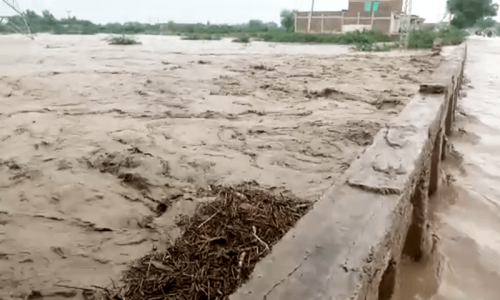
The climate change effects also triggered unprecedented rainfalls and floods in 2010, 2011 and 2013, which caused heavy damages to the infrastructure, agriculture, livestock and livelihoods, pushing the economy into decay.
The new provincial budget hopes to address the prolonged droughts and unprecedented rain that continue to damage the region’s infrastructure and agricultural landscape
Later, in 2022, Balochistan faced an unprecedented climate-induced disaster, with 22 of its 34 districts declared calamity-hit due to heavy rains and widespread flooding. The devastation affected 6.9 million acres of farmland; caused Rs10 billion in agricultural losses; wiped out 168,000 livestock; and inflicted Rs2.5bn in damages to the fisheries sector. Critical infrastructure, including 2,280km of roads, 43 bridges, 219 flood protection structures, and several irrigation systems, also suffered extensive damage, highlighting the province’s extreme vulnerability to climate shocks.
The crisis was further compounded in the 32 disaster-affected districts, where an estimated 284,312 houses were destroyed. Given the damage, the federal government of Pakistan secured loans from donors, including a $400m loan from the World Bank, to support the province of Balochistan.
The persistent drought-like conditions in Balochistan — intensified by recurring episodes of heavy rainfall, flash floods, and forest fires — underscore the urgent need for more than just reactive response mechanisms. What the province requires is a forward-looking, comprehensive climate resilience strategy that is fully aligned with the Sustainable Development Goals (SDGs).
Fortunately, Balochistan already benefits from a range of internationally funded and community-led climate projects, which offer valuable models for integrating sustainable initiatives into both development and non-development budgets. Through this fund, policy instruments can also be developed to transfer climate-related financial risks — particularly in infrastructure, crops, and livestock — to insurance and capital markets.
In order to ensure long-term climate resilience, the Government of Balochistan’s climate change initiative under the fund needs to be institutionalised by adopting proven best practices and making targeted investments across key thematic areas.
Since Balochistan is a water-stressed region further worsened by the drought, water resource management should be prioritised through rainwater harvesting, groundwater recharge, and efficient irrigation systems to help in recharging the groundwater table as well as to preserve the available water resource.
Traditional and obsolete farming methods should be replaced by climate-smart agriculture, emphasising drought-resistant crops, agroforestry, and organic techniques. Olive cultivation, in particular, offers a viable alternative to traditional crops like apples. It’s growing success in some districts and international demand calls for strategic and gradual expansion. Institutional support to build a robust value chain and unlock business opportunities will support the farmers to willingly shift to the new crop cultivation.
Renewable energy development — prioritising solar, wind, and biogas — is an important area to be accelerated through public-private partnerships and by allowing a conducive environment for potential investors to contribute.
Livelihood diversification is equally vital and can be achieved by promoting eco-tourism, experimenting with livestock insurance, and investing in green skills training. Moreover, conservation initiatives should be taken to work on protecting and restoring ecosystems that include the juniper forests and coastal mangroves through active community involvement and modern techniques.
Lastly, but most importantly, building climate-resilient infrastructure, such as adaptive housing, sustainable communication networks, resilient dams and early warning systems, will be required to prepare for climate change shocks.
The writer is a provincial civil servant and public policy analyst based in Quetta (views expressed in this article are the writer’s own and do not reflect any organisation)
Published in Dawn, The Business and Finance Weekly, June 30th, 2025