0
0

ISLAMABAD: The Asian Development Bank (ADB) and two United Nations specialised agencies — the Food and Agriculture Organisation (FAO) and the World Health Organisation (WHO) — have joined hands with the government to start implementation of Pakistan’s Pandemic Fund through a national consultation to establish ‘One Health Units’ across the country.
The objective of the ‘One Health Units’ is to strengthen pandemic prevention, preparedness and response capacities across the country to be ready to prevent and respond to future pandemics, protecting millions of lives, ADB, FAO and WHO announced on Saturday.
Pakistan has been awarded $18.7 million from the ‘Pandemic Fund’ to strengthen its ‘One Health’ coordination and ability to ward off public health threats. The project has catalysed an additional $4.1m in co-financing and $49.7m in co-investment.
Pakistan’s Pandemic Fund strategy — aligned with the National Action Plan for Health Security (NAPHS) and the International Health Regulations (IHR) — emphasises the One Health (OH) approach as an integrated framework that recognises the interdependence of human, animal and environmental health to tackle complex health threats. Over 75 per cent of emerging and endemic human infectious diseases originate from animals, compounded by rising antimicrobial resistance (AMR) and climate-driven disease spillovers.
A national consultation held in Islamabad was the first activity of an initiative funded by the ‘Pandemic Fund’ to apply the lessons learned from the Covid-19 pandemic and strengthen the country’s One Health coordination and ability to ward off public health threats, and thereby contributing to the preservation of public health at the regional and global levels.
Under the leadership of the Ministry of Health, ADB, FAO and WHO are the implementing partners of Pakistan’s Pandemic Fund, while the National Institute of Health (NIH) will host its secretariat.
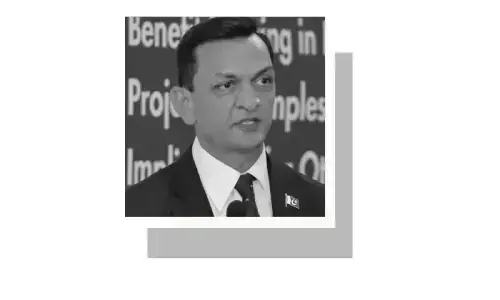
“The Pandemic Fund represents a critical opportunity for countries such as Pakistan to enhance national capacities for pandemic preparedness, prevention, and response,” said Director General Health Dr Shabana Saleem. “In the wake of recent global health emergencies, it has become increasingly evident that a robust and integrated approach is essential to mitigate the impact of future pandemics. The interdependence of human, animal, and environmental health, compounded by the growing challenge of antimicrobial resistance, necessitates the adoption and operationalisation of the One Health framework.”
“By strategically leveraging the resources provided through the Pandemic Fund, Pakistan can strengthen its surveillance systems, augment laboratory networks, and expand community-level health interventions. Moreover, a coordinated, cross-sectoral response will not only improve our domestic health security but will also contribute meaningfully to global public health efforts, she added.
Implementing One Health as a guiding principle will enable us to develop sustainable, resilient health systems capable of addressing complex health threats and safeguarding the well-being of our population,“ she further said.
The future One Health structures will play a vital role in coordinated surveillance, early warning systems for zoonotic and environmental threats, joint data sharing, and workforce training across sectors.
FAO Representative in Pakistan Florence Rolle lauded Pakistan’s momentum in addressing zoonotic risks, AMR, and food safety through multi-sectoral collaborative platforms. “The Pandemic Fund presents a strategic opportunity to move from commitment to coordination and from planning to action through structures embedded within existing government systems, with clear mandates, defined governance structures and multi-sectoral representation.”
“The devastating impact of the Covid-19 pandemic was a painful reminder that stronger health systems and improved coordination are no longer optional—they are essential. WHO stands with Pakistan and its partners to be ready to save lives when the time comes,” said WHO Representative Dr Dapeng Luo.
“This consultation marks a critical step towards institutionalising the One Health units that will serve as platforms for collaboration, data sharing and joint actions, ensuring that Pakistan is better prepared to prevent, detect and respond to future health threats,” said ADB Senior Project Officer Mansoor Ali Masood.
Published in Dawn, June 29th, 2025