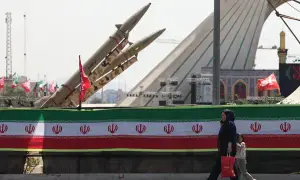


THERE are no good choices for Pakistan in the Iran-Israel conflict, particularly in the escalation due to US involvement. Do nothing, and the conflagration will spill over anyway, in the form of refugees or smuggled arms. Pakistan is also concerned about the influx from Iran of Baloch militants and the prospect of Israel establishing long-term air control over Iran or installing a puppet regime in Tehran, given close links between India and Israel.
Side with Iran and Pakistan risks international isolation, the expansion of Israeli or US strikes into Pakistani territory, the erosion of ties with the US and other Iran-sceptic allies such as the Gulf nations, and direct involvement in the Middle Eastern conflict.
Facilitate the US in its support of Israel, particularly if Washington plans additional strikes, and Pakistan risks a back-to-the-future misadventure. While enabling the US may strengthen ties with Washington and bring precious dollars, it will also unleash domestic sectarian tensions and exacerbate Baloch militancy (as Tehran may seek to undermine Pakistan through enabling cross-border insurgent groups). Other local resistance, potentially violent and extremist and grounded in anti-colonial sentiment, may also target our state in a rejection of complicity. The economic consequences of losing access to Iranian oil will also be significant.
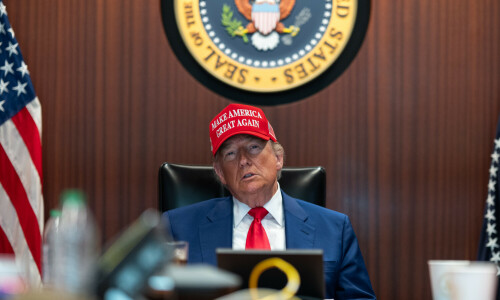
Even after the US strikes against Iran’s nuclear facilities, the best choice remains a negotiated end to the conflict. For now, this options seems to be a non-starter as Iran will feel compelled to retaliate against the US incursion. Washington, for its part, is demanding that Iran arrive at the negotiating table ready to cease all nuclear enrichment.
The best choice remains a negotiated end to the conflict.
Tehran is unlikely to agree to a total suspension of its nuclear programme, particularly in light of Israeli and US actions against Iran and its proxies over the past two years. If anything, the Iranian regime is likely to be more focused now on rebuilding its nuclear programme to deter future attacks. The Israelis, meanwhile, are emboldened, having become accustomed over recent months to acting with impunity and now reassured by unconditional US support (despite the fact that political winds within America had started to blow away from it).
Pakistan could still play a productive role at this juncture by serving as a conduit and mediator between Tehran and Washington. Pakistan is well positioned for this given both its productive ties with the IAEA and its history as a ‘front-line’ state. Our establishment could urge US restraint through reminders of futile Western military interventions in the region. But even on this count, Pakistan may struggle to argue for talks over bunker-busters because any position on Iran’s nuclear trajectory could attract renewed international interest in our nuclear programme.
Pakistan’s lack of choices highlights the consequences of our securitised national calculus. There are no compelling narratives linked to human rights, trade, connectivity, resource sharing, technology transfer, etc, that can help clarify Pakistan’s approach to the crisis. Indeed, following US strikes, our main calculation will be how to ensure Pakistan’s nuclear programme is not subject to similar targeting, further prioritising the security paradigm in all our affairs.
We are not alone in this predicament. The privileging of securitised strategic imperatives is inevitable in this era of ‘the end of human rights’, when human toll and freedoms do not even feature in global decision-making as tangential footnotes.
Interestingly, in 2023, during celebrations to mark the 75th anniversary of the Universal Declaration of Human Rights, a different story was emerging, one that reiterated the continued relevance of human rights, despite otherwise dire prognoses borne of the Global North’s hypocritical foreign policies and tendency to invoke human rights frameworks in a politicised and cynical way.
Research conducted by Geoff Dancy and Christopher Fairss based on the analysis of Google Trends data from 109 countries found no decline in interest in human rights, and in fact greater interest in human rights issues in the Global South than the Global North. Similarly, a 2023 survey by the Open Society Foundations found that 72 per cent of respondents worldwide, and particularly in the Global South, had a positive view of human rights.
This positivity will have undoubtedly mellowed over the past two years, particularly in light of the conflicts and war-induced near-famines in places like Gaza and Sudan. But there is clearly appetite for a non-securitised approach to proliferating global challenges. Perhaps Pakistan will find a clearer path out of the Iran quagmire by returning to the basics and putting human safety and dignity first.
The writer is a political and integrity risk analyst.
X: @humayusuf
Published in Dawn, June 23rd, 2025