Jhelum police claim ‘efficient response’ on back of Safe City system
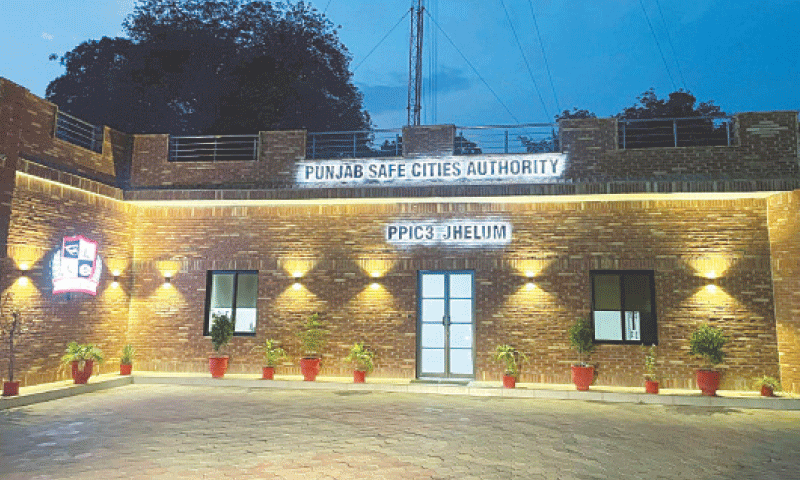


The Punjab Safe Cities Authority (PSCA) monitoring system, recently launched in Jhelum, is aiding the district police to track criminals, manage traffic, and expedite emergency response, officials said.
A control room has been established adjacent to the district police office, where the Safe City officials monitor CCTV feeds round the clock. These visuals are relayed in real-time to the relevant police stations for prompt action.
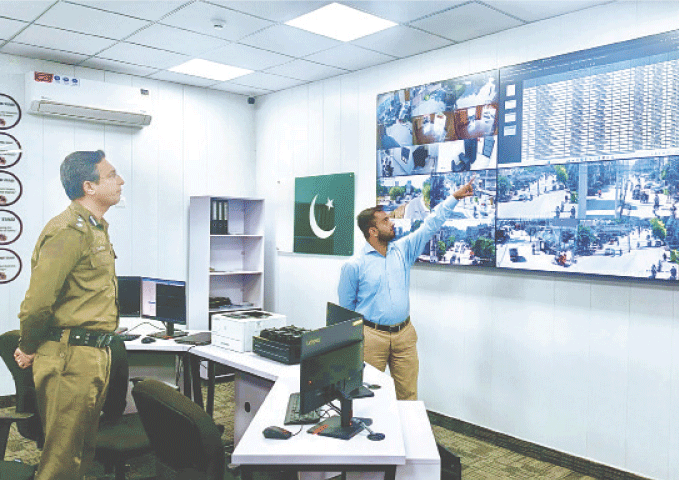
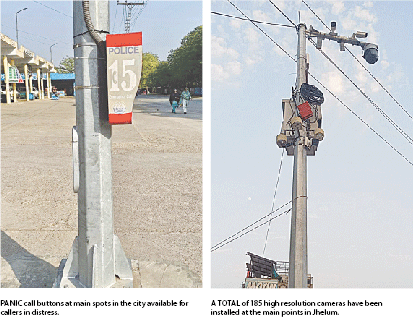
According to District Police Officer (DPO) SSP Tariq Aziz Sindhu, 185 high-resolution cameras have been installed at 32 key locations across Jhelum, including the city zones and the entry and exit points of its four tehsils. Additionally, six panic buttons have been installed in areas, like public bus stands, allowing citizens to instantly communicate with PSCA during emergencies. The system also provides Wi-Fi at five spots and also includes two sensors to monitor air quality.
DPO Sindhu claimed that surveillance had been “instrumental in solving blind murder cases, robberies, vehicle theft, purse snatching, kidnappings, and burglaries”. He added that the monitoring of commercial hubs and tracking police response time to incidents has added to operational efficiency. The DPO claimed that the crime rate had gone down after the Safe City system became operational.
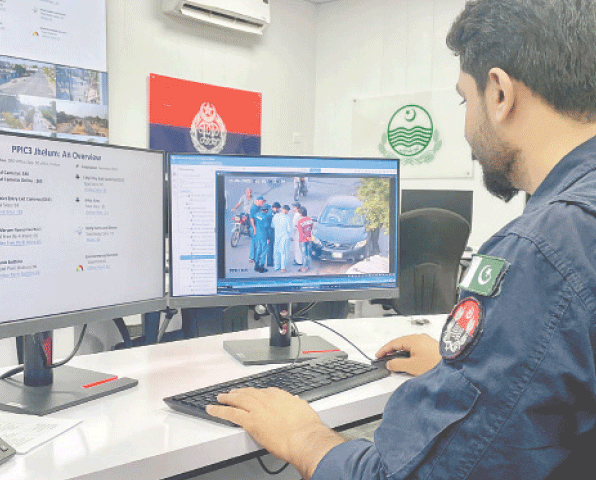
He claimed video evidence from PSCA cameras also strengthened court prosecutions. “To further support policing, all station house officers (SHOs) have been given smart LTE handsets to receive real-time alerts and improve coordination with other stations,” he added. Moreover, Rs0.4 million has been recovered from e-challan defaulters, over 2,000 traffic warnings have been issued, and more than 100 beggars have been apprehended, he added.
Civil Lines Police Station SHO Qamar Sultan noted that the system had helped the local police crackdown on crime. He claimed several suspects wanted in cases like murder, motorbike theft, and robberies had been arrested, while many missing children had also been recovered with the help of the PSCA network.
PSCA Punjab Managing Director Ahsan Younis said the system was operational in 18 districts under its Phase-I, and there were plans to expand it to 19 more by the end of 2025. Over 14,500 CCTV cameras have been deployed across the province so far, he said, adding that the authority aimed to launch the project in tehsils, extending infrastructure to the smaller administrative units. He hoped that the plan would be included in the 2025-26 Annual Development Program (ADP).
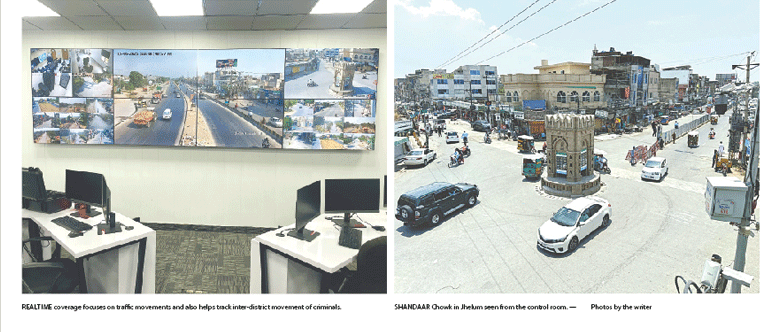
Mr Younis emphasised that the broader vision of a “Safe Punjab” is steadily becoming a reality. Lahore, the provincial capital, has pioneered AI-driven traffic enforcement in South Asia through the use of Automatic Number Plate Recognition (ANPR) cameras, he said, maintaining that these cameras detect 19 types of traffic violations in real-time, including speeding, red-light violations, illegal parking, and smoke-emitting vehicles. Similar AI-enabled systems will gradually be rolled out to other districts, according to the official.
Published in Dawn, June 23rd, 2025