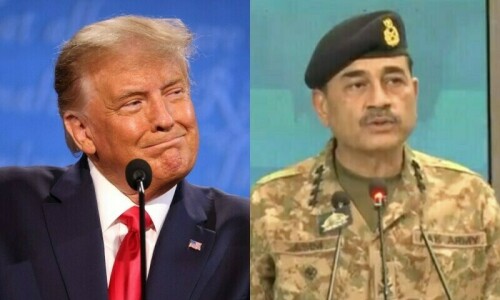
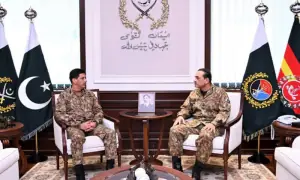
PAKISTAN is, for the moment, in President Donald Trump’s good books, as he told the media that he “loves” this country before throwing a working lunch in honour of Field Marshal Asim Munir at the White House on Wednesday.
Though the meeting, apparently arranged through ‘unconventional means’, may have rewritten the rules of protocol, as no senior civilian leader was present, the fact is that when it comes to matters of import, American leaders have always preferred dealing with Rawalpindi rather than holders of high office in Islamabad.
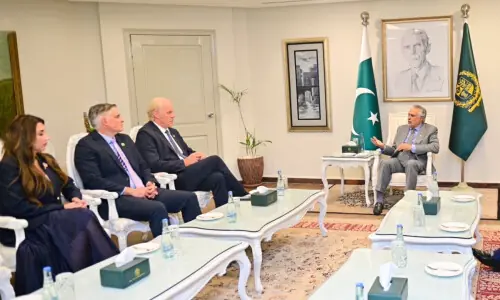
The meal was unprecedented in many ways, as previously, Pakistani generals have met US presidents directly, but only when the former were serving as military rulers of this country. As per ISPR, the meeting was marked by “depth and cordiality”, while counterterrorism and trade dominated the agenda.
Mr Trump said he wanted to thank Field Marshal Munir “for not going to war with India”, while reiterating the claim that it was his intervention that prevented last month’s Pakistan-India clashes from transforming into a full-blown conflict. The meeting indicates that the Trump administration is interested in engaging Pakistan, particularly in areas of close personal interest to the US president, such as cryptocurrencies and trade in rare earth minerals, and that the Pakistan-India dispute is still on the US leader’s radar.
Mr Trump has on several occasions said he is ready to mediate the Kashmir dispute, even though India has said it will “never” accept such mediation. The improvement in Pakistan-US ties is welcome, especially when compared to the lukewarm nature of relations under Joe Biden’s watch. Mr Trump had himself been critical of Pakistan during his first term.
Yet Pakistan must proceed carefully. Improved ties with Washington should be pursued, especially in the economic and geopolitical spheres. But it should also be remembered that the US leader is known for making sharp U-turns, and what is considered American policy today may be disowned and discarded tomorrow.
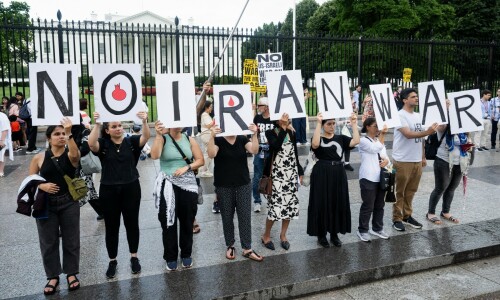
The Iran-Israel situation also came under discussion between Mr Trump and the field marshal. The significance of this is considerable, as Pakistan is a neighbour of Iran, while it also shares decades-old military ties with the US. Whatever decision Mr Trump takes vis-à-vis Iran — and it is certainly hoped that he decides not to join Israel’s reckless war on Tehran — the civilian and military leadership here must keep in mind Pakistan’s position on the conflict.
Pakistan’s parliament has passed a unanimous resolution condemning Israeli aggression against Iran, and expressing solidarity with our western neighbour. Political parties and civil society here are also opposed to Tel Aviv’s military action against Iran. Therefore, however things develop on the battlefield, Pakistan must maintain this position, and stand by its neighbouring state.
Published in Dawn, June 20th, 2025