Supreme Court rules against construction in Karachi DHA park, except for jogging track
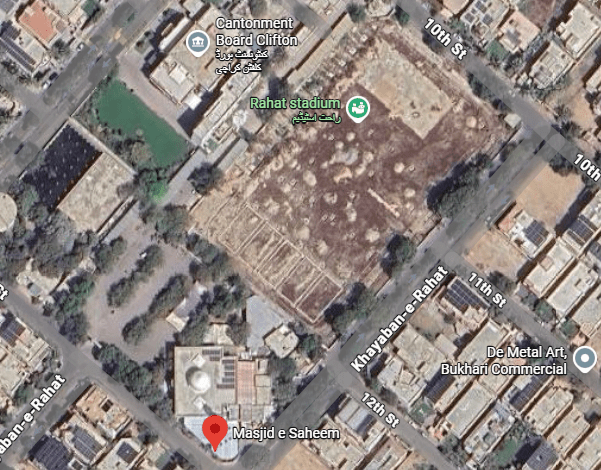


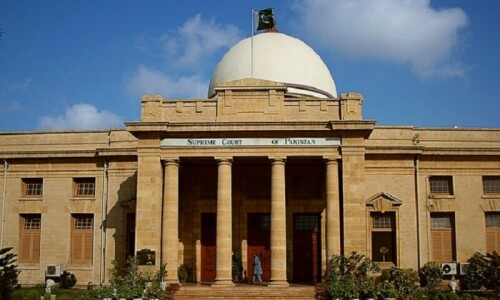
KARACHI: The Supreme Court (SC) has restrained the authorities concerned from raising any structure apart from a jogging track on the premises of an amenity plot / park located in the Defence Housing Authority (DHA).
The apex court also said that the people must not be deprived of the park’s utility, subject to a nominal entrance fee meant for its maintenance.
A two-judge bench comprising Justice Mohammad Shafi Siddiqui and Justice Salahuddin Panhwar was hearing a civil petition filed against an order of the Sindh High Court (SHC) at the SC’s Karachi Registry.
It also allowed a request by the counsel for the respondents to transfer the matter to the principal seat at Islamabad after seeking the approval of the chief justice of Pakistan, as the lawyer submitted that, since the injunctive order had been passed, the interests of the respondents were at stake.
Bench rules ordinary people should not be deprived of park’s utility
Citing DHA, Cantonment Board Clifton (CBC), M/s Optimum Sports (Private) Limited and others as respondents, the managing committee of Masjid-i-Saheem, located at Khayaban-i-Rahat, Phase VI, DHA, along with some neighbouring residents, moved the apex court through their counsel Khawaja Shams-ul-Islam against an order of the SHC passed on March 11.
The bench in its order said that the lawyer for the petitioners had placed before it a case whereby it was claimed that a “public park” meant for the use of common persons was now being licensed to an entity for its commercial gain and that every individual entering the park would be charged exorbitantly.
The counsel also argued that the purpose of the amenity, i.e. public park, cannot be changed into any other amenity, depriving the public at large from utilising it solely as a park.
The lawyer for the petitioners also maintained that although a division bench of the SHC dealt with some of the issues, including the locus standi of the petitioners, nonetheless, a public interest litigation was involved.
Representing the respondents, Advocate Hussain Ali Almani asserted that public entry was not restricted, but it would be subject to an entrance fee for the jogging track.
He also submitted that presently, the respondents were raising a jogging track and had planned to construct padel courts and other allied structures.
The bench in its order said, “We are of the view that apart from the jogging track, no structure of the nature as licensed to them or otherwise, be raised till the next date of hearing and the common person shall not be deprived to park’s utility subject to nominal fee meant for its maintenance.”
At this juncture, the counsel for the respondents requested for the transfer of the case to the principal seat of the apex court, as he submitted that the interests of the respondents were at stake after issuance of the injunctive order.
Thereafter, the bench directed its office to transfer the case to the principal seat in Islamabad for further hearing, after seeking approval of the chief justice, and to fix it for hearing in the opening week after the summer vacations.
The petitioners contended that the amenity plot/parking lot in question was adjacent to the mosque, the entrance of which was connected with the masjid, and that it was a park admeasuring over two acres.
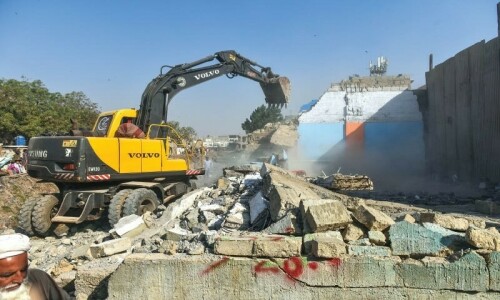
They also asserted that the present controversy arose when M/s Optimum Sports (Private) Limited had started demolishing/altering the main gate of the masjid and parking lot, and after a long discussion the petitioners were told that the parking lot had been given to the private firm by way of a licence agreement executed between the firm and DHA and CBC.
They further argued that the contract, without an open auction or any public tender and without following the Public Procurement Regulatory Authority Rules, was seriously hampering the right of access to the mosque, as the namazis had been using the designated parking of the masjid for over 30 years.
The petitioners asserted that the impugned SHC order dismissing their petition suffered from legal infirmity, as it ought to have appreciated that state functionaries, in awarding contracts, must act fairly, reasonably, honestly and justly and that the high court has the power to judicially review administrative actions to check their fairness, reasonableness and transparency.
Published in Dawn, June 20th, 2025