0
0

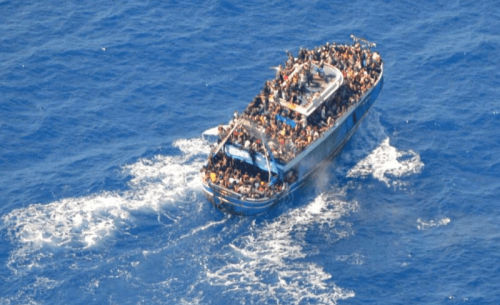
TRIPOLI/BERLIN: At least 60 migrants are feared dead after a pair of shipwrecks off the coast of Libya over the past week, according to the International Organisation for Migration (IOM).
The first ship went down on June 12 near a Libyan port in Tripoli, with 21 people, including women and children, reported missing and only five survivors found, the IOM said in a statement on Tuesday.
Those lost at sea included Eritrean, Pakistani, Egyptian and Sudanese nationals. The second wreck took place about 35 kilometres off the port city of Tobruk, with the sole survivor reporting 39 people lost at sea, according to the UN body.
“With dozens feared dead and entire families left in anguish, IOM is once again urging the international community to scale up search and rescue operations and guarantee safe, predictable disembarkation for survivors,” said Othman Belbeisi, the IOM’s regional director for the Middle East and North Africa.
According to the statement, at least 743 people have died so far this year trying to cross the Mediterranean to Europe. The deadly route, it said, is “marked by increasingly dangerous smuggling practices, limited rescue capacity and growing restrictions on humanitarian operations”.
As of June 15, according to the UN High Commissioner for Refugees, migrant landings on the Italian coast were up 15 per cent year on year, with most originating in Libya.
Mediterranean rescue
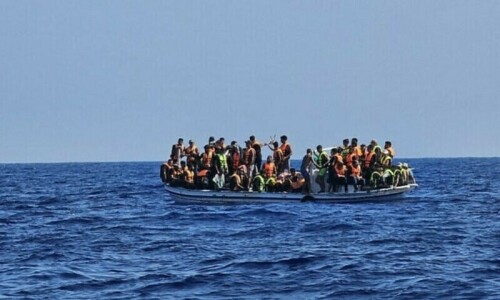
Maritime rescue organisations said on Wednesday they had pulled more than 175,000 people from the Mediterranean over the past 10 years, as waves of migrants sought to use the dangerous sea route to reach Europe. The group of 21 NGOS active in the region estimated that at least 28,932 people had died while trying to cross the sea since 2015.
The majority had died in the central Mediterranean — waters between Libya, Tunisia, Italy and Malta — Mirka Schaefer of German NGO SOS Humanity told a Berlin press conference. In that area, the equivalent of five adults and one child lost their lives every day over the past decade, she said. The number of unrecorded cases was likely to be “significantly higher”, she added.
Of the 21 organisations currently engaged in maritime rescue in the region, 10 of them are based in Germany. Between them, the groups operate 15 boats, four sail ships and four planes. The organisations have frequently clashed with authorities over their rescue operations, which were launched as Europe’s migration crisis broke out in 2015, when hundreds of thousands headed to the continent, mostly from the Middle East.
In Italy, the current government has vowed to end crossings and attacked NGOs for creating a “pull factor” that encourages departures, something migration observers say is unproven. Giorgia Meloni’s hard-right government has passed laws requiring rescue ships to return to a designated port, a measure NGOs say is contrary to maritime law.
“The pressure on us is growing,” Schaefer said, criticising a lack of support from the German government.
Published in Dawn, June 19th, 2025