Artifact preservation institute awaiting completion for a decade
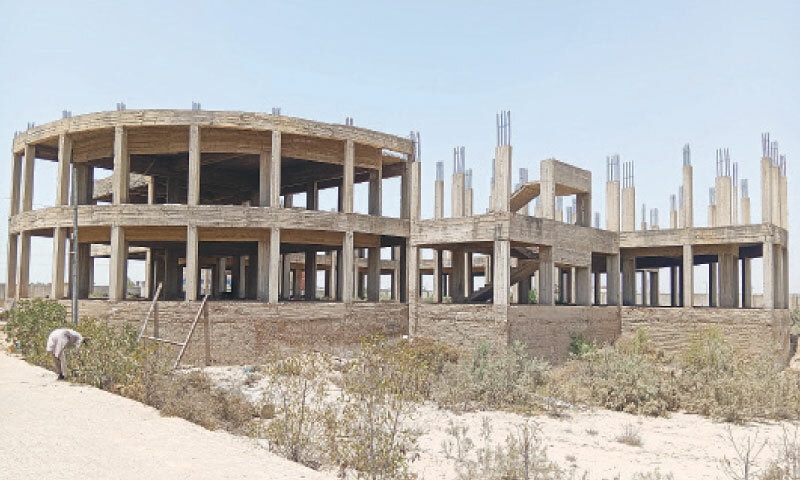

THATTA: Work on the completion of the Institute for the Preservation of Artifacts in this historical district could not be resumed over the last decade or so.
The institute is aimed at training people on conserving and preserving heritage and artifacts.
The concrete skeleton, left incomplete nearly a decade ago, was reportedly intended to serve as a crucial artisan training centre for the conservation of Thatta’s rich archaeological and cultural heritage. Today, it stands as a series of unfinished concrete structures.
Sources say that the structure is originally earmarked to host a comprehensive training facility offering specialised courses in heritage conservation. Planned skills include archaeological conservation techniques, epigraphy (the study of inscriptions), intricate woodcraft, mirror work and traditional stone carving — all vital for preserving Thatta’s historical treasures, including the Makli Necropolis, a Unesco World Heritage site.
The concept of this center dates back to 2010, when Dr Kaleem Lashari, a prominent figure in archaeological preservation, proposed its establishment between Thatta and Makli. The location was strategically chosen for its high tourist footfall, drawing both local and international visitors weekly.
Dr Lashari envisioned more than just a training center. His plan included the development of an archaeometry laboratory for testing stones, wood and ceramics recovered from the excavation sites. He emphasiSed the monumental task of researching, collecting and conserving antique items, highlighting a strong thematic focus on the history of Thatta city.
“Everyone knows Thatta for its historical landmarks like the Makli Necropolis and Shah Jahan Mosque,” said Dr Mohammad Ali Manjhi, an academician and historian. “But this Artisan Training and Conservation Center will provide an organiSed and detailed account of our history. We believe it will serve as a vital educational resource for locals and visitors alike, fostering a deeper appreciation for our ancestral heritage.”
Dr Manjhi praised the tireless efforts of the archaeology department to protect and promote Sindh’s invaluable heritage. He noted that the department has amassed a wide collection of artifacts from Makli, Thatta and Banbhore, which are currently displayed at the Thatta Archaeology Museum. These include ancient pottery, excavation tools, intricately crafted jewelry, historical manuscripts and relics from various dynasties that once ruled the region.
“Each artifact has been meticulously conserved to offer a comprehensive narrative of Thatta’s role in the broader history of Sindh and the subcontinent,” he said. “Through this institute, we aim to create opportunities for research, skill development and hands-on conservation training.”
Dr Manjhi further added that the institute will enable researchers to delve deeper into the history of Thatta and lower Sindh, especially the eras of the Samma, Arghun, Mughal, Tarkhan and even the British who arrived via the Indus Delta.
However, Aziz Lashari, a local heritage enthusiast, questioned the incomplete construction of the decade-old structure. “Its continued abandonment raises serious concerns,” he said. “Why was this important project never completed, especially when the demand for trained heritage conservation professionals in Thatta is more urgent than ever?”
Local community members and cultural preservation advocates are hopeful that lessons learned from this stalled project will guide the successful launch and completion of the newly-proposed Institute for the Preservation of Artifacts — ensuring Thatta’s rich heritage is protected and celebrated for generations to come.
Published in Dawn, June 11th, 2025