Pakistan won’t allow India to cross IWT red line, PM Shehbaz tells int’l glaciers conference



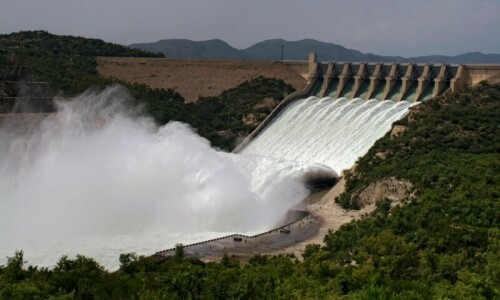
Prime Minister Shehbaz Sharif on Friday, rejecting the weaponisation of water, warned that Pakistan would not allow India to cross the red line by holding the Indus Waters Treaty in abeyance and endangering millions of lives for narrow political gains.
Delhi suspended its participation in the Indus Waters Treaty (IWT) of 1960, which governs the usage of the Indus river system, shortly after 26 civilians in India-held Kashmir were killed in what India called an act of terror.
Pakistan has denied involvement in the incident, but accord remains “in abeyance” by India despite the two nuclear-armed neighbours agreeing to a ceasefire this month following the worst fighting between them in decades.
After the April 22 attack, Indian Prime Minister Narendra Modi ordered officials to expedite planning and execution of projects on the Chenab, Jhelum and Indus rivers, three bodies of water in the Indus system that are designated primarily for Pakistan’s use, six people told Reuters.
The three-day International Conference on Glaciers’ Preservation is being held in Tajikistan’s capital Dushanbe from May 29-31.
It is being attended by over 2,500 delegates from 80 UN member states and 70 international organisations, including prime ministers, vice presidents, ministers, and UN assistant secretaries-general.
The event is being hosted by the Tajikistan government in collaboration with the United Nations, UNESCO, WMO, the Asian Development Bank, and other key partners as a historic moment for climate ambition, glacier preservation, and international cooperation.
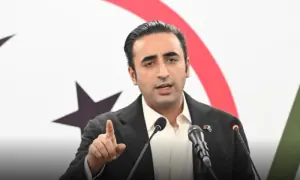
“India’s unilateral and illegal decision to hold in abeyance the Indus Waters Treaty, which governs the sharing of the Indus Basin’s water, is deeply regrettable,” PM Shehbaz said while addressing the conference.
“Millions of lives must not be held hostage to narrow political gains, and Pakistan will not allow this. We will never allow the red line to be crossed,” he said.
During his address, PM Shehbaz touched upon all relevant issues, including glacial preservation, Pakistan’s climate vulnerability, the 2022 floods in Pakistan, global climate action and responsibility, scientific projections on glacial melt, weaponisation of water and call to protect nature and humanity’s shared destiny.
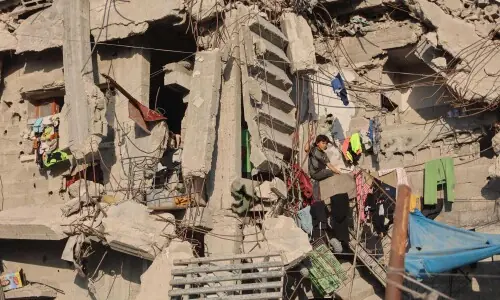
“The world today bears fresh scars from the use of conventional weapons in Gaza that have left deep wounds. As if that were not enough, we are now witnessing an alarming new low—the weaponisation of water,” PM Shehbaz observed.
He added that Pakistan, being home to over 13,000 glaciers, was the most concerning as glaciers contributed nearly half of the annual flows in the Indus river system — “the lifeline of our civilisation, culture and economy”.
“The five great rivers that shape our geographical landscape—Indus, Jhelum, Chenab, Ravi, and Sutlej—all depend on the stability of glacial systems. This makes Pakistan one of the most vulnerable countries to any climatic changes that impact glaciers,” he continued.
He told the gathering that Pakistan had faced the peril of glacial melt in the form of devastating floods in 2022 that destroyed millions of acres of standing crops, thousands of houses as well as infrastructure — despite the country contributing only less than half a per cent of the total world’s emissions and yet being one of the 10 most vulnerable countries.
He prayed that no other country faced such devastation, which necessitated a comprehensive plan and immediate implementation.
Referring to the “sobering” scientific projections, he highlighted that glacial melt in the country’s region was expected to accelerate flooding in the coming decades, followed by a drastic decline in river flows as glaciers recede further.
“These changes threaten our fragile ecosystem. As we inch closer to these grim new realities, we must heed the alarm bells, deflection signs of haunting consequences—lost livelihoods, displaced families, and deep chaos,” he warned.
Highlighting Pakistan’s commitment to shared responsibility and collective action, he called for enhanced global climate action to mitigate the negative impacts of climate change.
“The developed countries must meet their climate financial commitments without any delay and with a balanced focus on adaptation and mitigation as well as loss and damage.
“Adequate funding for climate resilience, infrastructure, and overcoming financing gaps remains critical for climate-vulnerable countries,” the prime minister emphasised.
“Investment must be made in early warning systems and disaster preparedness and management.”
PM Shehbaz reflected on his childhood memories of swimming in the Ravi river, underscoring how rivers like Ravi and Tajikistan’s Vakhsh river, fed by glaciers, sustained life across regions, and that the shared water sources symbolised a common ecological destiny, requiring collective efforts for their preservation.
“Let us protect and preserve nature’s precious bounties for our planet and our peoples,” he urged.
The prime minister is currently returning to Pakistan after capping off his four-nation tour of friendly countries, state-run PTV News reported.
Earlier this week, the PM and his delegation, including Chief of Army Staff (COAS) Field Marshal Asim Munir, visited Turkiye, Iran and Azerbaijan, expressing gratitude for their support during a recent military escalation with India.
On Wednesday, the PM took part in a trilateral summit with Turkiye and Azerbaijan. He reiterated Pakistan’s willingness to hold talks with India on the Kashmir dispute and counterterrorism, stressing New Delhi wanted the same “in all sincerity”.