THE tragic events of 1971 were a watershed moment — one of many — in Pakistan’s troubled history, when the nation conceived by the founding fathers was rent asunder by a brutal civil war, and later Indian involvement.
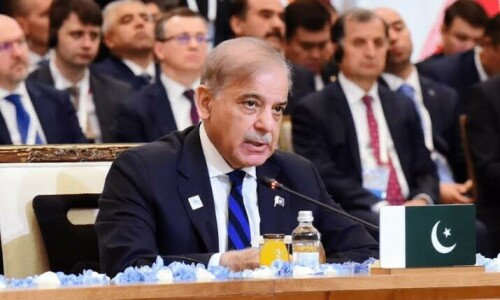
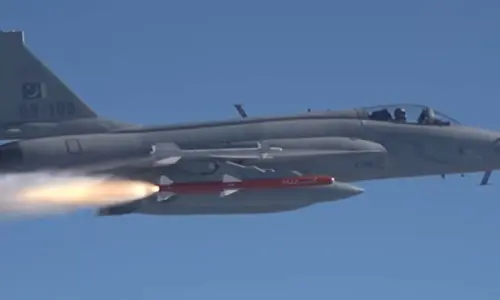
In the aftermath of the recent hostilities with India, several references have been made to 1971 by the prime minister himself. On Thursday, while on a visit to Azad Kashmir, Shehbaz Sharif said that Operation Bunyanum Marsoos was “divine retribution” for 1971. Earlier, while visiting troops in Pasrur last week, he asserted that the military had “avenged” the 1971 war.
While staunch defence of the country and the ability to fend off unwarranted Indian aggression are indeed something to be thankful for, we must not let triumphalism and hyperbole cloud our view of history, particularly of an event as traumatic as the separation of the eastern wing.
The fact is that we have not had any national-level reckoning of the separation of East Pakistan, and the creation of Bangladesh. Resultantly, our rulers have, over the decades, continued to make the same mistakes that were made in the lead-up to the 1971 war. Political disputes in the former eastern wing were dealt with through administrative and later security steps, largely because of Ayub Khan’s long spell of military rule, followed by Yahya Khan’s mishandling of the crisis, which by that time had reached existential proportions.
Politicians in both wings were not free of blame either; but the fact is that it was the martial rulers of the time who bore the ultimate responsibility for the loss of the eastern wing. No doubt, India played an extremely damaging role, meddling in what was essentially Pakistan’s internal matter and abetted the break-up. Considering these grim facts, is it apt for Mr Sharif to describe the recent thwarting of India’s hostile designs as revenge for the loss of East Pakistan?
Instead of evoking triumphalism, the latest clash with India requires Pakistan to soberly reflect on both its internal and external challenges. Defence of the country is non-negotiable, and the administration along with the armed forces must remain vigilant.
Yet it is equally important to face our internal challenges with sagacity and determination. Amongst the foremost of these is countering the wave of terrorism afflicting the nation, as well as reviving the economy. Internal political reconciliation is also essential. In short, there is much work to be done.
Once we put Pakistan on the path to prosperity, where its people have health, education and sufficient employment, where constitutional protections are extended to each citizen, and there is peace in the larger neighbourhood, we can say that the losses of the past have been ‘avenged,’ and that Pakistan has risen.
Published in Dawn, May 24th, 2025