0
0

ISLAMABAD: The Lahore High Court’s Rawalpindi Bench has directed the federal government to initiate a broad-based consultative process on a proposed amendment to the Muslim Family Laws Ordinance, 1961, taking a significant step towards reforming Pakistan’s family law framework.
The order was issued during the hearing of a constitutional petition filed by Saima Shafi concerning family matters.
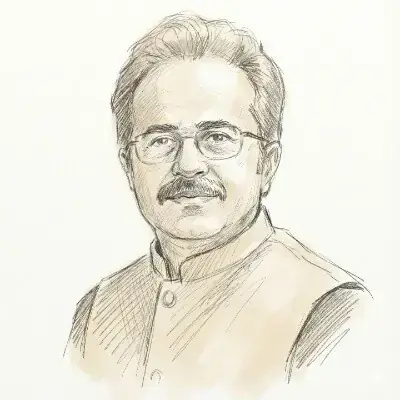
Presiding over the bench, Justice Jawad Hassan stressed the importance of expert and public engagement before finalising the Muslim Family Law (Amendment) Act, 2024 — a private member’s bill introduced by Senator Barrister Syed Ali Zafar.
The bill proposes the inclusion of new legal concepts such as “husband’s asset”, “matrimonial asset”, and “wife’s asset” into Pakistan’s Muslim family law framework.
During the proceedings, the court was assisted by legal experts including Barrister Syed Ali Zafar (also acting as an amicus curiae, or friend of the court), Huma Ejaz Zaman, and Barrister Faiza Asad. A reference was made to global practices on matrimonial property laws from countries such as Egypt, Malaysia, Turkey, the UAE, as well as key foreign judgements from India, Ghana and Singapore.
LHC’s Justice Jawad stresses importance of expert, public engagement
The case has attracted nationwide attention due to its potential to redefine the legal rights of spouses, particularly women, regarding asset division after the dissolution of marriage.
The court has already heard extensive arguments from the petitioner’s and respondent’s counsel, as well as multiple amici curiae, including Syed Iqbal Hashmi, who presented a four-volume submission grounded in Islamic jurisprudence, the Constitution of Pakistan, and previous superior court judgements.
Justice Hassan noted that previous judicial interventions had successfully catalysed legislative reforms in various domains. He cited the 2022 landmark judgement in Mst Sana Khursheed v. Government of Punjab (PLD 2022 Lahore 346), which contributed to the enactment of laws such as the Punjab Domestic Workers Act, 2019, and the Punjab Empowerment of Persons with Disabilities Act, 2021.
Invoking Rule 3(3) and Rule 4(2) of the Federal Rules of Business, 1973, the court emphasised the constitutional role of the Ministry of Law and Justice in drafting and vetting legislation.
Published in Dawn, May 23rd, 2025