0
0

• Military contacts lead to extension of ceasefire till 18th; US wants both nations to uphold truce
• Dar says ultimately ‘political dialogue’ will take place to address all issues; reiterates opposition to Indian move to end Kashmir’s autonomy
• Senate resolution condemns India for unprovoked strikes against Pakistan
• Trump claims hostilities between nuclear neighbours ‘settled’, asks both to focus on trade
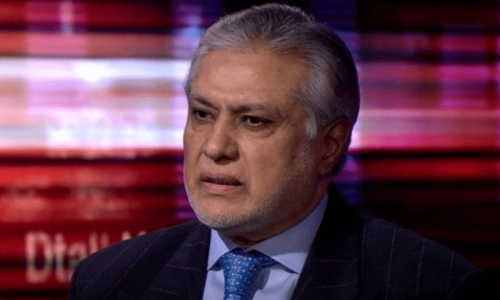
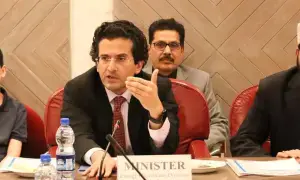
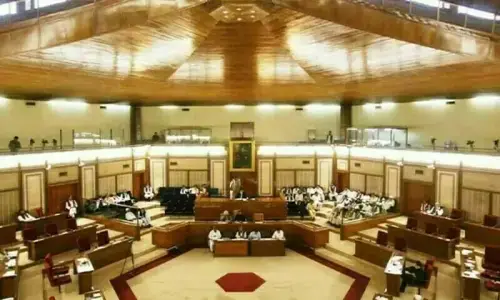
ISLAMABAD: As Pakistan and India extended the nascent ceasefire till May 18, Foreign Minister Ishaq Dar on Thursday informed the Senate that Pakistan sought a “composite dialogue” with New Delhi to put all contentious matters to rest.
According to the foreign minister, the ceasefire was extended through military-to-military communication, but a political dialogue will ultimately have to take place to resolve the problems between the two neighbours. “We have told the world that we will hold a composite dialogue,” he informed the Senate.
The FM said Pakistan had never accepted the unilateral revocation of occupied Kashmir’s special status by India in 2019, while also warning that any attempt to block Pakistan’s water through the unlawful suspension of the Indus Waters Treaty would be treated as an act of war.
He said there was no clause in the treaty under which it could be held in abeyance. “It could neither be amended nor terminated unilaterally,” he said, alluding to the Indian move to hold the treaty in abeyance following the Pahalgam shooting. The deputy prime minister said India used the Pahalgam incident as a pretext to sabotage the Indus Waters Treaty.
The FM also clarified that Pakistan had not sought the ceasefire in conversations with world leaders during the heightened tensions with India. In fact, US Secretary of State Marco Rubio, during a telephonic conversation, conveyed that India was willing to halt hostilities, he added.
The FM also referred to subsequent calls from friendly countries and said Pakistan’s position that it desired peace with dignity and honour was explained to all. “We told our friends that we would not initiate an attack, but we would certainly respond if provoked,” he said, adding that Pakistan’s response was measured, decisive, and in line with international law.
The foreign minister pointed out that the recent conflict began after the Pahalgam incident, which India instantly blamed on Pakistan in the absence of any evidence. “We offered a transparent and neutral investigation into the Pahalgam attack, but India refused,” he regretted.
‘No longer diplomatically irrelevant’
Speaking about the recent conflict, he said Pakistan was “no longer diplomatically irrelevant”. “Pakistan is no longer diplomatically irrelevant; we have proven our strategic and diplomatic significance.”
As she opened the debate on the recent escalation, PPP leader Senator Sherry Rehman said that Pakistan established its clear dominance in the tactical field as compared to India’s far more expensive force. “This war was deliberately thrust on us,” she said, adding that Pakistan demonstrated to the world it was a responsible nuclear power.
Leader of the Opposition in the Senate Shibli Faraz said it was the right time to push the country towards normalisation and political stability. “We have seen the performance of the nation when it is united,” he said, urging the government to pursue Pakistan’s foreign policy aggressively. He said that the recent escalation internationalised the Kashmir issue once again.
Resolution against India
The house also unanimously adopted a resolution strongly condemning the unprovoked Indian attacks on innocent civilians, including women, children and mosques, while praising the befitting response by the armed forces. The resolution urged the government to proactively engage the international community for the peaceful, just and lasting resolution of the Jammu and Kashmir dispute.
It stressed the importance of strict adherence to the Indus treaty and reaffirmed Pakistan’s unwavering resolve to protect its rightful share of water as a fundamental component of national security, international agreements, economic stability, and sovereignty.
It reminded India that any violations of the Indus treaty constituted a serious breach of international humanitarian law, and amounted not only to a war crime, but also a crime against humanity, with grave, regional, and global repercussions.
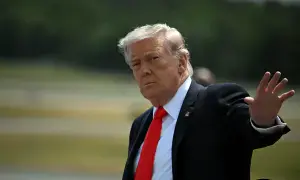
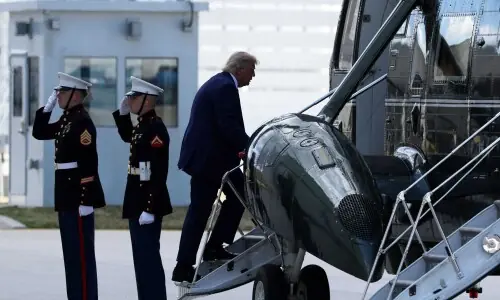
Separately, US President Donald Trump urged the two countries to focus on trade instead of war. He told US troops at a base in Qatar during a Gulf tour that Pakistan and India were happy with that, reported Reuters.
‘Maintain ceasefire’
The State Department on Thursday said the United States had urged India and Pakistan to maintain the current ceasefire.
Asked at a Washington press briefing about the reported extension, State Department Principal Deputy Spokesperson Tommy Piggott said: “What we are happy to see is the ceasefire. That’s where our focus remains — and on the direct talks we want to see.”
Piggott credited both Indian and Pakistani leadership for agreeing to the truce. “The President (Trump) has been clear in praising both prime ministers for choosing the path of peace,” he said.
“For the past couple of days, we’ve been saying that we want to encourage and see direct talks between the parties. We have been clear on that,” Piggott emphasised.
Anwar Iqbal in Washington also contributed to this report
Published in Dawn, May 16th, 2025