0
0

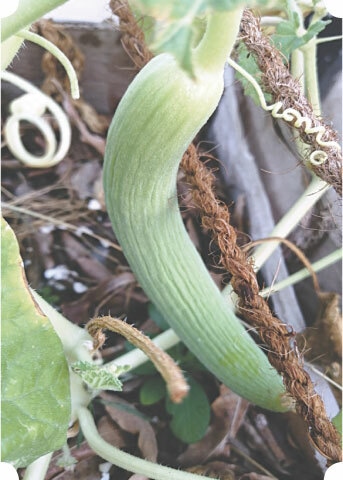
One of the most widely used vegetables in Asia, especially South Asia — where it is sold as a snack by road-side sellers — is the Armenian cucumber. Belonging to the gourd family, the Armenian cucumber is scientifically known as Cucumis melo. The gourd family includes the likes of cucumbers, bitter gourds, round bottle gourds and melons.
The Armenian cucumber is similar to the gourds mentioned above not only in terms of growth and consumption, but also in taste. The Armenian cucumber’s common names include long melon, serpent melon, snake melon, snake cucumber and yard-long cucumber.
While the Armenian cucumber has been widely grown throughout Asia for centuries, it made its way to Europe via the people of Armenia. This is the reason why it is globally known by that name.
You might have consumed it as a snack, cut longitudinally, with mild salt and pepper sprinkled on top. Locally, the Armenian cucumber is usually referred to as kakrri in Urdu, while it is also known as taar in the Punjabi language.
The popular cucumber is not only a preferred savoury snack in South Asia, but also convenient to plant and grow at home
Due to its bulk harvest and relatively easy to handle gardening processes, Armenian cucumber is one of the preferred choices among kitchen gardeners. The seeds of the Armenian cucumber are edible and a healthy proposition to consume. The seeds are usually not removed from the fruit and are eaten in the same manner as the seeds of strawberry.
Armenian cucumber seeds are very light in weight and somewhat flat. In shape, they resemble the seeds of melons, watermelons and cucumber, being oval with one end pointed. The seeds are usually white to cream in colour and small in size.
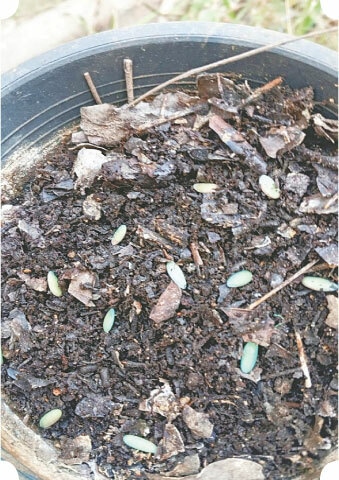
One aspect of growing an Armenian cucumber vine is that it can be grown virtually anywhere and in almost any kind of container. It can be planted in the ground, pots, grow bags and flower beds as well as around other potted plants and almost any available empty space.
There are a few varieties of Armenian cucumber, including green Armenian, dark green Armenian, white or silver Armenian, striped Armenian and a few others, each with subtle changes of colour, texture and consistency from each other. When visiting the seed store, be mindful to acquire those seeds that match your requirements. The varieties which are a best fit for those living in Karachi are the green and the striped ones.
The seeds of the Armenian cucumber should ideally be sown in the summer or spring seasons. In Karachi, this corresponds to the months of February to March or later, after the monsoon period, during the months of July and August. If the seeds are old or one is not sure of their age, then they should be left submerged in water overnight. No such precaution is needed if the seeds are fresh or recently extracted.

The container should be filled with nursery soil. It should be devoid of any stones and pebbles. The soil should be thoroughly watered before sowing the seeds. This ensures that the small seeds remain at their sowing place afterwards and do not get washed away or shift from their original place of sowing, if the soil is being watered after the sowing of seeds. In the seedling tray, one seed per cell is sown; in the seedling pot, a distance of half to one inch is maintained on either side.
The seeds are placed on the surface of the soil and are lightly sprinkled with a layer of fine compost. Lightly sprinkle the upper surface with water. The seedling tray or pot should then be covered up with a plastic bag and put aside in shade, with no or negligible sunlight exposure, to ensure water retention and reduce the chances of evaporation. The pot is to be kept there till the eventual germination begins.
Published in Dawn, EOS, May 11th, 2025