Hungary backs GSP+ status for Pakistan


• Multiple agreements and MoUs signed, including abolition of visas for diplomatic passport holders
• Trip marks 60th anniversary of diplomatic ties with Budapest
ISLAMABAD: Hungary will support the continuation of Pakistan’s Generalised Scheme of Preferences Plus (GSP+) status within the European Union, Hungarian Foreign Minister Péter Szijjártó said on Thursday.
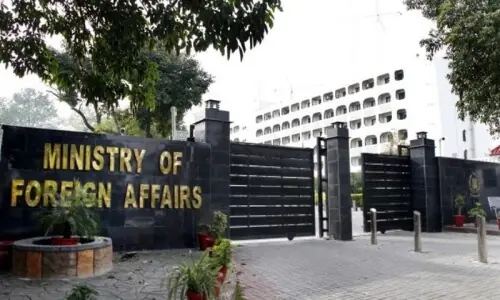
“Hungary stands up for the extension of the GSP+ programme, which means a special tariff-free regime of trade between the European Union and Pakistan beyond 2027 as well — and I think this is a mutual interest of both of us,” Mr Szijjártó said at a media conference alongside Deputy Prime Minister and Foreign Minister Ishaq Dar after their bilateral meeting at the Foreign Office.
Mr Dar welcomed the expression of support saying “We are grateful for Hungary’s commitment to support the continuation of GSP Plus for Pakistan.”
Pakistan currently benefits from GSP+ trade concessions, allowing duty-free access to EU markets in exchange for implementing 27 international conventions related to human rights, labour rights, environmental protection and good governance. While the scheme officially continues through 2027, the European Union is expected to conduct a mid-term review in 2025 as part of its biennial monitoring mechanism.
The EU has raised concerns over Pakistan’s treatment of political opposition, restrictions on freedom of expression, enforced disappearances, and the use of military courts to try civilians — issues highlighted during a January visit by EU Special Representative for Human Rights Olof Skoog.
A monitoring mission is expected later this year, with the possibility of a review as early as June. Trade officials warn that without visible progress, Pakistan’s preferential access to EU markets could be at risk.
The Hungarian foreign minister’s remarks came against the backdrop of his country’s own strained relationship with Brussels. Hungary, under Prime Minister Viktor Orbán, has faced EU censure over erosion of democratic norms, judicial independence, and media freedoms.
Budapest has frequently blocked EU consensus on foreign policy issues, including sanctions against Russia, earning criticism for what some EU members call alignment with Moscow and Beijing.
Mr Szijjártó made Hungary’s displeasure with the EU’s direction clear, telling reporters, “Unfortunately, the European Union has isolated itself too much while confusing issues which have nothing to do with trade, and I hope that this is not going to last forever.
“We both [Pakistan and Hungary] believe that we should bring back the respect to sovereignty as a basis of international politics. Instead of interfering into domestic issues of each other.”
Mr Szijjártó’s day-long visit marked the 60th anniversary of diplomatic relations between Hungary and Pakistan. He was accompanied by a delegation of 17 business leaders from sectors including agriculture, food processing, water management, ICT, and medical technology.
“We have hit the record of imports from Pakistan last year. We would like to hit the records of exports to Pakistan this year as well,” Mr Szijjártó said, emphasising Hungary’s interest in enhancing trade ties.
The two sides signed multiple agreements and memorandums of understanding (MoUs), including in culture (2025-2027), archaeology and cultural heritage, and the abolition of visas for diplomatic passport holders.
Earlier in the day, Mr Szijjártó also met Prime Minister Shehbaz Sharif and the commerce minister. The business forum brought together more than 100 Pakistani entrepreneurs and concluded with a B2B networking session aimed at strengthening private sector linkages.
Published in Dawn, April 18th, 2025