Iran, US running out of time to secure deal, says IAEA chief

• Trump blocked Israeli plan to strike nuclear sites
• Netanyahu insists Israel will not allow Tehran to acquire nuclear weapons
• Saudi minister arrives in Tehran ahead of Iran-US talks
TEHRAN/WASHINGTON: UN nuclear watchdog chief Rafael Grossi said on Thursday that Iran and the United States were running out of time to secure a deal as they prepare to hold fresh nuclear talks this weekend.
Iranian and US delegations are to gather in Rome on Saturday for a second round of Omani-mediated negotiations, a week after the longtime foes held their highest-level talks since US President Donald Trump abandoned a landmark nuclear accord in 2018.
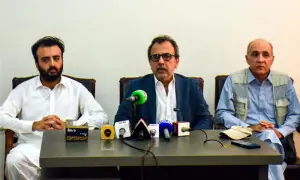
“We are in a very crucial stage of these important negotiations. We know we don’t have much time, this is why I am here... to facilitate this process,” Grossi said on a visit to Tehran. “We are working hard and we want to succeed,” he told a joint news conference with Iran’s atomic energy agency chief Mohammad Eslami, acknowledging that the search for a deal was “not an easy process”.
On Wednesday, Grossi met with Foreign Minister Abbas Araghchi, who led the first round of talks with US Special Envoy Steve Witkoff on Saturday.
Araghchi said he had a “useful” meeting with the International Atomic Energy Agency chief. “The IAEA can play a crucial role in peaceful settlement of the Iranian nuclear file in the coming months,” he said. Araghchi called on the IAEA chief to “keep the agency away from politics” in the face of “spoilers” seeking to “derail current negotiations”. He did not elaborate.
Before heading to Iran, Grossi told French newspaper Le Monde that Tehran was “not far” from possessing a nuclear bomb. Western governments have long accused Iran of seeking to acquire a nuclear weapons capability, an ambition Tehran has consistently denied.
A year after Trump pulled out of the 2015 nuclear deal, Iran began rolling back its own commitments under the agreement, which gave it relief from sanctions in return for IAEA-monitored restrictions on its nuclear activities.
In its latest report, the IAEA said Iran had an estimated 274.8 kilogrammes (605 pounds) of uranium enriched to up to 60pc.
That level far exceeds the 3.67pc enrichment ceiling set by the 2015 deal, but still falls short of the 90pc threshold required for a nuclear warhead.
Trump’s blockade of Israeli attack
US President Donald Trump scuppered an Israeli plan to strike Iranian nuclear sites, the New York Times reported on Wednesday. Trump administration officials revealed to the New York Times that Israel had sought Washington’s assistance to carry out an attack on Iranian nuclear facilities in May. According to the Times, the plan and its possible maneuvers were under consideration for months.
But during Prime Minister Benjamin Netanyahu’s visit to the White House last week, Trump told the Israelis he would not support an attack. The president instead publicly announced the direct talks with Tehran.
Netanyahu’s statement
Meanwhile, Netanyahu insisted on Thursday that Israel would not allow Iran to acquire nuclear weapons, even as US President Donald Trump attempts to negotiate a new nuclear deal with Tehran.
Netanyahu’s remarks were his first on the issue since US-Iran talks began earlier this month, and followed the Trump efforts to block Israel’s plan to strike Iranian nuclear sites.
“As the prime minister has stated many times: Israel will not allow Iran to acquire nuclear weapons,” a statement from Netanyahu’s office said.
“The prime minister has led countless overt and covert actions in the battle against Iran’s nuclear programme, without which Iran would today possess a nuclear arsenal,” the statement said. “These actions delayed Iran’s nuclear programme by nearly a decade.”
Trump’s efforts to reach a deal with Iran on its nuclear programme through mediation appear in contrast to Netanyahu’s long standing policy to tackle the issue using military action. “Prime Minister Netanyahu has been leading the global campaign against Iran’s nuclear programme for over a decade, even when some dismissed the threat and referred to it as a ‘political spin’ and called the prime minister ‘paranoid,’” his office said.
Saudi minister’s visit
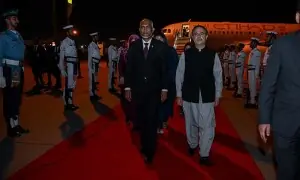
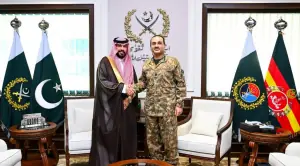
Moreover, amid heightening tensions surrounding the ongoing Iran-US talks, Saudi Arabia’s Defence Minister Prince Khalid bin Salman arrived in Tehran on Thursday for meetings with officials, Saudi state news agency SPA reported.
The visit took place ahead of a weekend talks between Iran and the United States over the Iranian nuclear programme.
Published in Dawn, April 18th, 2025