Govt, judiciary urged to reconsider Afghan repatriation plan



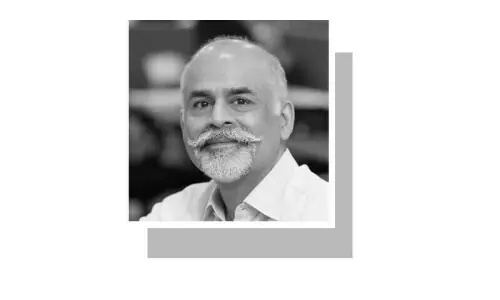
QUETTA: President of Afghan Refugees Pakistan Muhammad Tadeen Khan Tarakai has urged the federal government and judiciary to reconsider the decision to forcibly repatriate Afghan refugees and to play a role in finding a solution through mutual understanding and negotiations.
Speaking at a press conference on Monday alongside other Afghan representatives, including Noorullah Khan, Nadir Khan, Jumma Khan & Haji Hameedullah, he said: “Forcibly repatriating Afghan refugees is not the solution to the issue.”
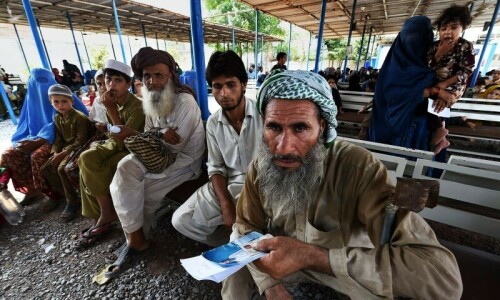
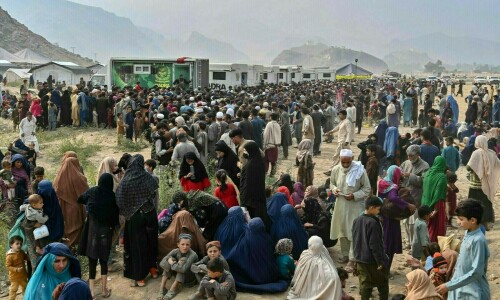
Mr Tarakai noted that over 3.5 million Afghan refugees are living in 72 camps across the country. He expressed gratitude to the people and government of Pakistan for their hospitality towards Afghan refugees for the past 45 years and emphasised that these refugees have not been involved in any issues in Pakistan.
He added that 1.4m Afghan refugees are registered with UNHCR and hold Proof of Registration (POR) cards, while 900,000 are registered with the IOM, and the UNHCR has issued tokens to 600,000 refugees. However, he pointed out that over half a million Afghan refugees are living in Pakistan without any documentation.
Mr Tarakai explained that the cards issued to refugees have expired and appealed to 53 NGOs to provide the necessary funds to the Pakistan government for renewing the cards. This would enable refugees to receive $375 for travel expenses and ration for two years under the UNHCR repatriation programme.
He highlighted the difficulties Afghan refugees face in returning to Afghanistan, as many have no homes, jobs, or business opportunities to support themselves. “We have been living in Pakistan for over four decades, and two generations were born here,” Mr Tarakai said, adding that these refugees have contributed to the development of Pakistan.
“Forcible repatriation is not in the interest of either country,” he stated, urging that both nations resolve their issues through negotiations.
Published in Dawn, April 15th, 2025