Won’t allow middlemen to stop people from reaping benefits of reduced inflation: finance minister


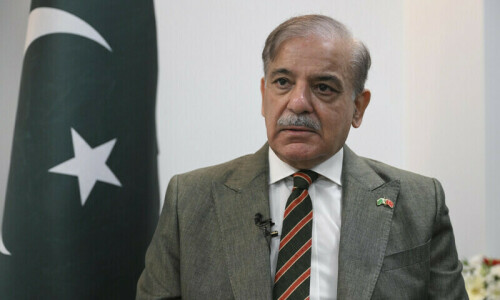
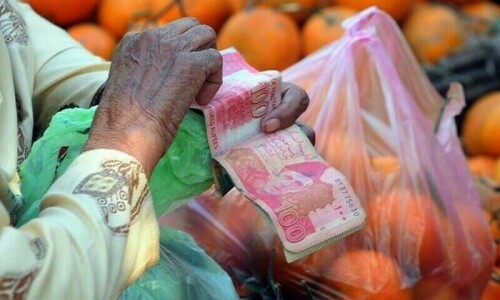
Finance Minister Muhammad Aurangzeb on Saturday said that the government would ensure that the benefits of reduced inflation directly reached the common man and “middlemen” would not be allowed to exploit the system.
Pakistan’s headline inflation dropped to 0.7 per cent year-on-year in March 2025, marking the lowest reading since December 1965, according to data released by the Pakistan Bureau of Statistics (PBS) on Thursday.
The decline surpasses both market expectations and the Ministry of Finance’s projection, which had anticipated inflation between 1pc and 1.5pc for March. Research firm Arif Habib Limited (AHL) confirmed the 59-year low, citing State Bank of Pakistan (SBP) data.
The monthly inflation rate stood at 0.9pc, compared to a 0.8pc decline in prices in February and a 1.7pc increase in March 2024.
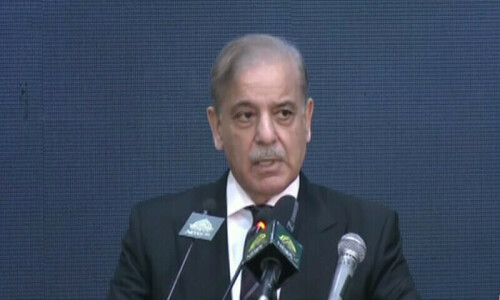
While addressing the business community at the Lahore Chamber of Commerce and Industry (LCCI) today, Finance Minister Aurangzeb admitted that the salaried class was bearing the tax burden, as income tax was deducted at source. However, he said that the government intended to offer relief to the salaried segment as well.
He disclosed that 24 national entities were earmarked for privatisation, stressing the need for reduced human interaction to resolve systemic issues.
“If we can increase the tax-to-GDP ratio to 13 per cent, we can offer broader relief to various sectors,” he said.
“If our policies were not having an impact on the common man, then there is no point,” he said, citing that edible prices were lowering and the middleman couldn’t reap benefits now.
The slowdown in the inflation rate, measured by the Consumer Price Index (CPI), is primarily driven by lower prices of wheat and its by-products, perishable items like onions, potatoes, and certain pulses and a reduction in electricity charges.
These products hold significant weight in inflation calculations, making even minor price changes impactful in reducing the overall inflation rate.
The full effect of the electricity tariff cut, announced by Prime Minister Shehbaz Sharif on Thursday, is expected to reflect in April’s inflation figures.
In contrast, sugar and edible oil prices are rising in the domestic market despite their declining rates globally. The government has permitted sugar exports, particularly to Afghanistan, citing surplus stock as the reason.
‘Game changers’
Aurangzeb said that the Information Technology (IT) and mineral sectors are going to be the game changers for the economy, adding that the premier was leading the economy and the country would see the best results soon.
The finance minister added that only nickel became a major export driver for Singapore with US$22 billion of share in exports, citing that copper has the potential to yield similar dividends for Pakistan.
He continued that global interest in the country’s mineral sector and IT potential was growing, and the government was focused on removing all barriers to attract and facilitate both local and foreign investment in these key sectors.
“We are here to serve the people. I am visiting chambers to listen, understand and resolve problems of the business community. The legitimate demands of the chambers will be accepted,” he said.
“We talk about economic stability. It is very important that if we cannot return the money of our country’s investors on time, how can we move forward? Lowering inflation is essential for economic stability. The interest rate was at 22pc, today it is at 12pc.”
The minister said that industrial growth was only possible if financing costs, power tariffs were reduced and improved taxation policies were put in place.
The minister added that hurdles to profit repatriation for foreign investors were addressed, boosting their confidence in the market.