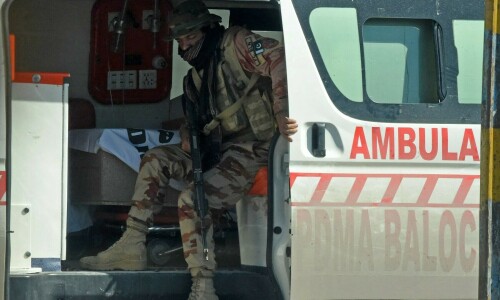
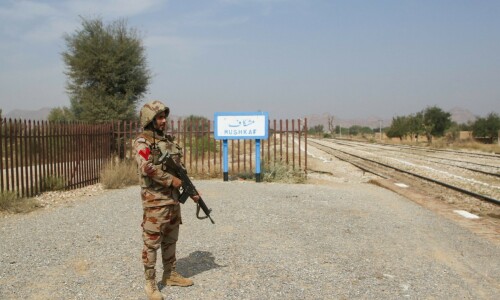
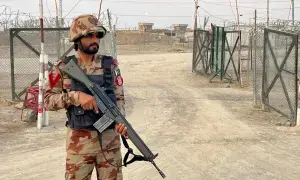
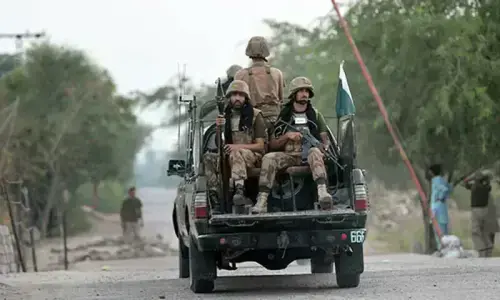
THE government’s decision to establish the National Intelligence Fusion and Threat Assessment Centre (Niftac) under the National Counter Terrorism Authority (Nacta) is a positive move — on paper. With violence escalating in KP and Balochistan and the TTP and BLA continuing their campaign of terror, Pakistan cannot afford to delay action. The deadly ambushes on security forces in North Waziristan, targeted attacks in Dera Ismail Khan and Gwadar, and the Jaffar Express hijacking in Balochistan demonstrate the growing sophistication and reach of militant groups.
Nacta’s fifth Board of Governors meeting, where Niftac was approved, also laid out plans for Provincial Intelligence Fusion and Threat Assessment Centres (Piftacs), a promising attempt to streamline threat analysis across federal and provincial lines. But Nacta has seen hopeful launches before. The Joint Intelligence Directorate approved in 2016 was hailed as a game-changer in intelligence coordination — until it faded into irrelevance. Similarly, past counterterrorism frameworks, including the National Internal Security Policy (2018–23), with its emphasis on non-kinetic measures, were left unimplemented. Now, faced with another wave of militant violence, officials have returned to old plans with renewed urgency.
The situation demands more than bureaucratic reshuffling or new acronyms. Pakistan’s CT response has too often consisted of making new bodies, issuing fresh mandates, and calling for coordination — without addressing the root causes of militancy or ensuring continuity in policy execution. If the government truly wishes to fortify the internal security apparatus, it must do more than approve plans. It must execute them in all earnest.
This means empowering Nacta to function as the country’s lead civilian CT authority. It also means breaking the cycle of sidelining Nacta after every surge of violence. It means funding and strengthening provincial CT departments to detect and disrupt militant networks before they strike. The ideological dimension of this war must also be tackled. As highlighted in the National Action Plan — the government’s central policy document on countering terrorism — long-term peace depends on addressing deep-rooted local grievances in restive areas like Balochistan and the merged districts of KP. Reconciliation, development, and deradicalisation initiatives cannot remain dormant words in a policy document.
As this newspaper argued last year, the state must prioritise reforms in regions that have long suffered from poverty, marginalisation, and security operations devoid of political will. Moreover, extremist and sectarian outfits that still operate in the public sphere must be dismantled. They feed the very ideologies that produce suicide bombers and armed groups. Reviving Nacta is important. But so is recognising that CT is not just about hardware and coordination cells. It is about political resolve, long-term investment in affected communities, and an unwavering commitment to implement what has already been promised. The question is whether this government, like others before it, will once again stop short of following through.
Published in Dawn, April 9th, 2025