Signalling a truce, why Modi’s visit to RSS headquarters is significant


 0
0


Prime Minister Narendra Modi visited the Rashtriya Swayamsevak Sangh (RSS) headquarters in Nagpur on Sunday, at a time when the Bharatiya Janata Party (BJP) leadership has been signalling a truce with its ideological parent after reports of some friction last year.
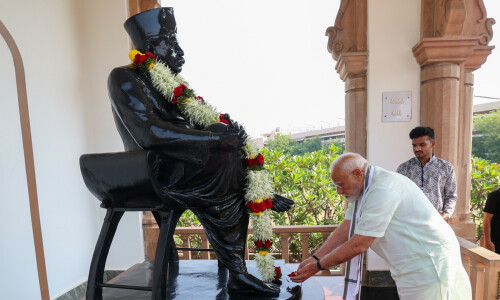
Modi visited the memorial of RSS founder Keshav Baliram Hedgewar, located at the Sangh’s headquarters in Reshim Bagh, on the occasion of his birth anniversary. He was accompanied by RSS chief Mohan Bhagwat.
The two leaders were also seen having a casual conversation on the sidelines. The visit comes on the day of Gudi Padwa, the Maharashtrian new year. This is also the 100th year of the RSS.
After his visit to the RSS headquarters, Modi visited Deekshabhoomi, where Dr BR Ambedkar and his followers embraced Buddhism. This was Modi’s second visit to Deekshabhoomi, the first one being in 2017.
Later in the day, the PM is scheduled to inaugurate an eye hospital aided by the RSS, Madhav Netralaya.
BJP spokesperson Madhav Bhandari told ThePrint, “Today is Gudi Padwa, an auspicious day for all of us. And so, the PM visited there (RSS headquarters) to take blessings. Also, this is the 100th year of the RSS and he visited to maybe discuss how to take things forward.”
“Besides, I don’t think how going there is something out of the box. BJP leaders and RSS functionaries keep on meeting regularly. [LK] Advaniji used to go, Atalji [Vajpayee] had also visited the headquarters,” he added.
Modi’s visit is, however, seen as significant for multiple reasons.
There was talk of differences between the BJP and RSS last year, before the Lok Sabha polls. BJP sources, however, say the synergy between the RSS and BJP has increased since then. PM Modi has also on multiple occasions hailed the RSS’s contribution to the nation. The Modi-Bhagwat meeting is seen as a step in the same direction.
The BJP is also in the process of finalising its new national president. Incumbent JP Nadda has held the post since January 2020. Traditionally, the RSS has played a key role in the choice of BJP national president.
Moreover, Modi’s grooming as a politician is steeped in the RSS. He became a pracharak of the outfit in Ahmedabad in 1972.
Speaking to ThePrint, an RSS functionary from Nagpur, who did not wish to be named, said that “last year, an image was created that all is not well between the RSS and BJP after a comment by Nadda”.
“But, the prime minister’s visit today to the RSS headquarters shows how strong the ties are between these two. This year is special as we are completing 100 years and the PM’s visit here will help us take our ideology to many places.”
Political commentator Hemant Desai also sees the visit as an effort towards coordination.
“The RSS has never liked a personality cult in the BJP that’s seen now in the leadership of PM Modi. Mohan Bhagwat had made statements indicating the outfit’s displeasure with this kind of a personality cult. After the Lok Sabha election, though, we can see the BJP and the RSS trying to work more closely together. Modi has also made statements praising the RSS,” he told ThePrint.
“With a prime minister going to the RSS headquarters, the BJP is also giving the message that Hindutva and nationalism are one and the same thing,” he added.
Modi’s pre-scheduled visit to Nagpur comes about 10 days after the city saw communal clashes. The Vishva Hindu Parishad and Bajrang Dal were protesting to demand the removal of Mughal emperor Aurangzeb’s tomb from Khuldabad in Chhatrapati Sambhajinagar. Tensions arose after reports of protesters allegedly burning a cloth with Islamic holy inscriptions on it. Maharashtra Chief Minister Devendra Fadnavis dismissed these as rumours.
Also Read: BJP committed to RSS ideology, can’t forget the mother who gave birth, says Nitin Gadkari
Signalling a truce
Last year, the RSS did not dive into the BJP’s campaign for the Lok Sabha elections. Nadda too had ruffled feathers by saying the BJP had become self-sufficient and had reached a point where it could function without the help of its ideological parent.
As the poll results were announced, the BJP still emerged as the single-largest party, but its tally dropped significantly from 303 seats in 2019 to 240 in 2024.
Following the result, the RSS got closely involved in the BJP’s preparation for assembly elections in Haryana and Maharashtra, which the party won with historic mandates.
A Nagpur-based BJP leader who did not wish to be named told ThePrint: “The relationship between the RSS and BJP is that of father and son. If the son doesn’t listen to the father multiple times, the father gives up and leaves the son to his own fate. But, if the son is really in trouble, the father immediately steps up to help. That’s what the RSS did for the party in the assembly polls.”
He also said the RSS is closely involved in the functioning of BJP-led state governments now, with regular meetings between its functionaries and BJP ministers.
In February, speaking at the Marathi Sahitya Sammelan in Delhi, Modi had praised RSS’ efforts towards nation-building. He also said that it was because of the RSS that he had the “good fortune of getting associated with Marathi language and culture”.
Then, earlier this month, speaking on the Lex Fridman Podcast, the PM said the teachings of Ramakrishna Mission, Swami Vivekananda and service-driven philosophy of the RSS nurtured him with a service-driven philosophy. He said he had found a life of purpose because of the RSS.
This article originally appeared in The Print and has been reproduced with permission.