HYDERABAD: Speakers at a memorial reference held in Besant Hall Cultural Centre here on Wednesday evening paid homage to the late eminent historian Dr Ghulam Mohammad Lakho.
They discussed the life and works of Dr Lakho — regarded as a trendsetter in the study and documentation of Sindh’s rich historical legacy.
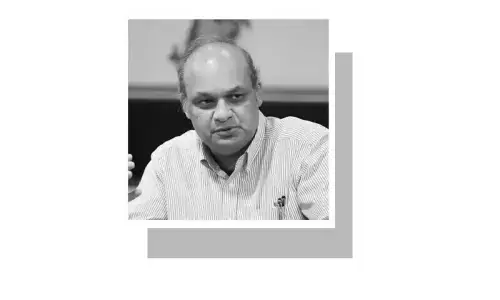
Dr Zaffar Junejo, a historian and writer offered an in-depth analysis of his works. He dealt upon the significant role that references played in Dr Lakho’s historical research. He explained that Dr Lakho, along with other historians, was influenced by Rankean school of thought, which emphasised a grand narrative of history and focused political events, institutions and key figures.
Dr Junejo highlighted characteristics of Rankean historiography, including its focus on descriptive and macro-level ‘analysis’ of history rather than delving into micro-level ‘events’.
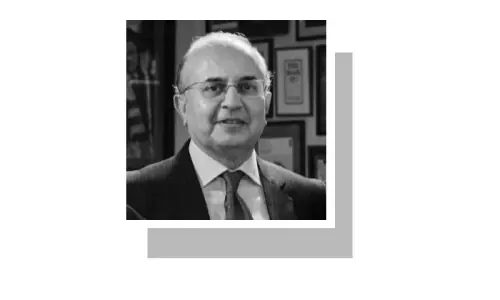
Dr Muhammad Ali Manjhi, a scholar of Sindh’s history and archaeology, focused historiography of Sindh with particular emphasis on work of native historians. He said that prior to the 19th century, much of Sindh’s history was documented by non-native historians. But, he said, with the advent of 19th century, native scholars began to contribute significantly to documentation of Sindh’s historical narrative. In this context, he named Dr Nabi Bux Khan Baloch and Pir Hussam-ud-Din Rashdi who, according to him, shaped the historical discourse of Sindh.
Dr Manjhi praised Dr Lakho for his comprehensive and distinct approach to historical writings, particularly in his works on Kalohra and Sama periods.
He noted that Dr Lakho’s works were not only rare and valuable in terms of historical periods they covered, but also in the way they presented history. He referred to Dr Lakho’s book Sama Empire, which offered comprehensive and insightful examination of period.
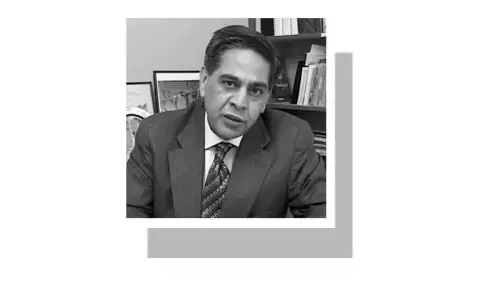
Dr Idrees Soomro, a scholar, shed light on Dr Lakho’s personal research journey. He shared anecdotes from Lakho’s career, illustrating how his scholarly pursuits were driven by a deep passion for understanding and documenting history of Sindh. He praised Dr Lakho for his meticulous approach to research and ability to engage with and critique works of historians.
The memoriam was chaired by Lal Bukhsh Jiskani, a writer and academician, who offered his thoughts on Dr Lakho’s legacy. Jiskani noted that Dr Lakho made significant contributions to Sindh’s historical scholarship. He studied under his mentors like Dr Mubarak Ali and had close academic ties with Pir Hussamuddin Rashidi and M.H. Panhwar. He said Lakho’s methodology distinguished him from scholars like Dr Mubarak Ali and Dr Hamida Khuhro, as he conducted historical research with a more accessible and practical approach. His works remained a critical reference for Kalhora period, combining historical analysis with case studies.
Sobhia Ali, Director Besant Hall, expressed gratitude to speakers for their participation in event.
Published in Dawn, March 28th, 2025