KARACHI: The Pakistan Business Council (PBC) has urged the government not to make hasty decisions on reducing customs duties without comprehensively studying the implications on imports and unemployment.
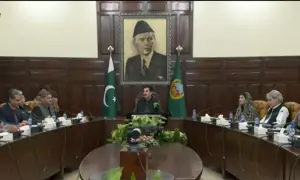
In a meeting with the secretary commerce and senior officials of the ministries of commerce, industries, finance and the Federal Board of Revenue (FBR) in Islamabad on Tuesday, PBC Chief Executive Ehsan Malik said a decision to curtail import duties should factor in the need to offset the high cost of manufacturing, foremost amongst which is the cost of energy, high interest rates, absence of long-term financing, difficulty in obtaining foreign exchange to import plant, poor infrastructure, low productivity, disproportionate burden of taxes on the formal sector, a level playing field versus the informal sector, regulatory drag, and weak protection from dumping.
Talking to Dawn, Mr Malik said the government team shared their ideas on reducing import tariffs ostensibly to create an impetus amongst manufacturing businesses to provide medium-sized businesses with more competitive inputs that would lead to higher exports and supply domestic consumers with cheaper and better products.
“We challenged this on the grounds that the reason why there was scope for manufacturing to become more competitive was not tariff protection. It was higher energy costs, absence of long-term bank loans, high cost of borrowing, paucity of foreign exchange for large capital projects, high taxes that leave little to reinvest, low productivity, poor infrastructure, and security considerations, all combined to reduce competitiveness. If these impediments could be addressed, there would be a reduced need for tariff protection,” the PBC chief said.
However, he feared that removing protection before creating a fit-for-growth environment would lead to the closure of the few industries that remain in the country, which had been prematurely de-industrialising over the last two decades. “Pakistan would then become a nation of traders. It would also lead to loss of jobs,” he warned.
He said the commerce ministry needs to work with the ministries of finance and energy to remove the obstacles that make manufacturing uncompetitive in Pakistan.
Mr Ehsan said the PBC team also warned that countries affected by US tariffs would likely turn to the Pakistan market to take advantage of its weak anti-dumping regime.
There was a broad agreement that the proposals to reduce import tariffs would be revisited to consider PBC’s observations, he said, adding that it was also pointed out to much higher weighted average tariffs in India and Bangladesh to protect local manufacturing.
Published in Dawn, March 26th, 2025