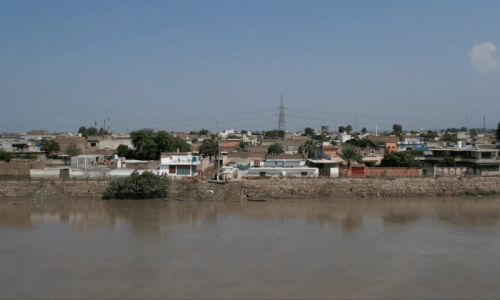
PESHAWAR: Peshawar High Court on Wednesday sought detailed report from provincial secretary of environment about environmental degradation in Peshawar’s Canal Road area as locals complained of pollution of the canal passing through the area due to leakage of drain water and dumping of garbage into it.
A bench consisting of Justice Ijaz Anwar and Justice Sabitullah Khan also directed the secretary of environment and officials of Khyber Pakhtunkhwa Environmental Protection Agency (EPA) to ramp up their efforts in addressing issues related to climate change and environmental pollution as situation in the province was not satisfactory.
The bench, known as green bench, was hearing multiple environment-related petitions filed by different lawyers including Ghulam Shoaib Jally, Naveed Akhter and Malik Misraf, etc.
The secretary of environment, Shahid Zaman, EPA director general Samiullah and the deputy director (legal), Mumtaz Ali, appeared before the bench and explained the steps taken by them so far for dealing with the issue of environmental pollution and climate change.
Asks officials to ramp up efforts for addressing climate change issues
During course of hearing, Justice Ijaz Anwar observed that on papers the government had been effectively addressing the issue of climate change, but reality on ground spoke otherwise. The bench observed that government had to adopt serious measures for tackling with the challenges posed because of climate change.
Hearing a petition related to environmental issues related to Canal Road area spread over several kilometres, the bench observed that government had constructed a drain along with the canal for passage of filthy water from residences and saving the canal from pollution.
However, it was said that the drain had caved in few years ago and the road along with it had also eroded, but no repair work had been started. The bench observed that there were also reports of civic authorities dumping garbage in the main canals passing through the city, which finally joined the Bara River.
Shahid Zaman gave details about recent steps taken by his department for strengthening legal framework as well as improving situation on the ground.
He stated that recently several rules were farmed including KP Rules for Environmental Audit, KP Provincial Quality Standards (Certification of Environmental Laboratory) Rules, KP Environmental Sealing and Seizing Rules, KP Environmental Protection (Smog Prevention and Control) Rules, KJP Environmental Protection Agency Uniform Rules and KP Hospital Waste Management Rules.
He said that they also drafted guidelines for 34 businesses/industries including fertiliser units, service stations, slaughter houses, dairy farms and soap industry, etc.
The secretary said that a centralised geographic information system (GIS)/management information system (MIS) cell had been established at EPA head office to manage online environmental approval process and field monitoring of industrial units.
He said that GIS/MIS was important in environmental impact assessment (EIA) and initial environmental examination (IEE) reports for monitoring and environmental assessment.
Mr Zaman said that EPA also planned to implement a continuous emission monitoring system (CEMS) for industrial units to enable real-time tracking of emissions, which would further strengthened environmental monitoring.
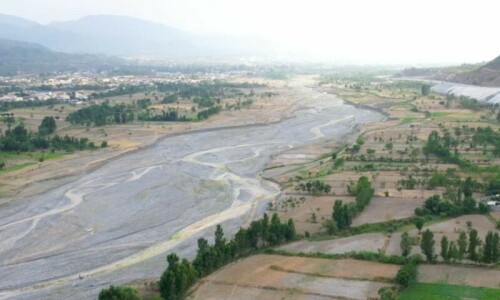
The bench drew his attention towards crushing plants operating near the Bara River, observing that the same had been resulting in pollution in the area. The bench observed that brick kilns had also been adding to the already deteriorating environmental conditions. It added that the brick kilns had to be converted to zigzag technology, which reduced emissions as compared to the traditional technology, but the same had not been done so far.
The secretary stated that conversion of brick kilns to zigzag technology was difficult as it was very expensive and kiln owners were hesitant about it. He added that in past when they had started taking action against brick kilns, the owners started shifting their business to Punjab.
He said that they had been in consultation with kiln owners for convincing them to shift to the environment-friendly technology.
About crushing plants, he stated that there were 900 plants across the province and action was taken against around 250. He added that according to their new SOPs, crushing plants couldn’t be established within 500 meters of residences.
About the Canal Road issue, he said that he would look into the matter as he was so far not aware about it.
Published in Dawn, March 20th, 2025