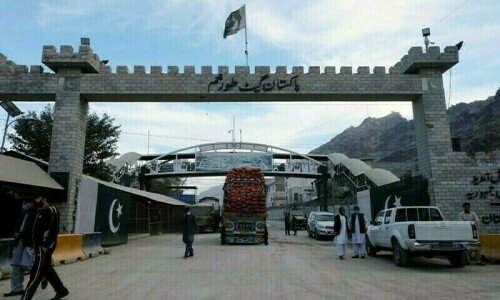
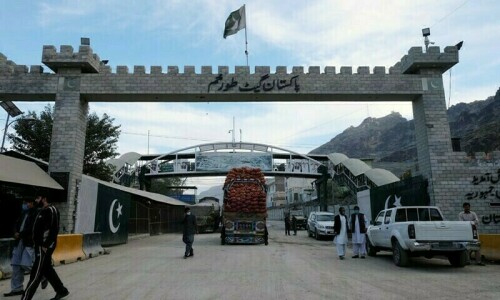
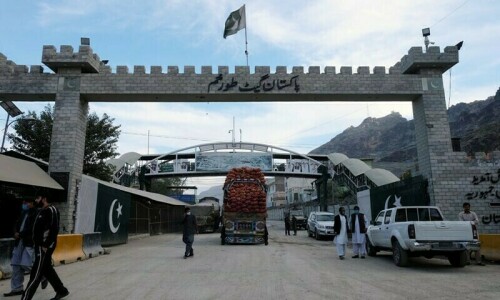
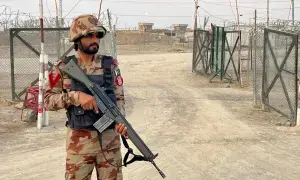
The Torkham border crossing reopened on Wednesday after 27 days following much-awaited parleys between jirga members of Pakistan and Afghanistan, according to a jirga leader from the Pakistani side.
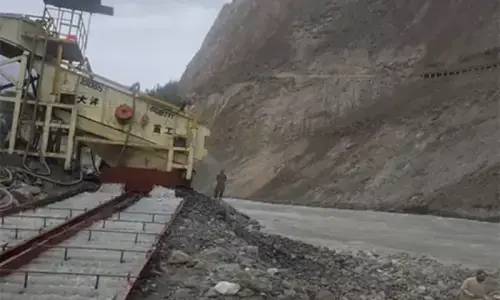
The cross-border movement of people via the Torkham border crossing was abruptly suspended on February 21 after Pakistani and Afghan security forces developed differences over construction activities on both sides of the border.
The situation worsened this month when eight people, including six troops, were injured as Pakistan and Afghan Taliban forces traded fire at the border.
A number of houses, a mosque and some offices of clearing agents were hit by artillery shells, and cross-border firing continued for three days. Since then, tribal elders on both sides of the border have been engaged in talks to end the stalemate.
Around 5,000 commercial trucks had been stuck on both sides, causing millions of dollars worth of losses to traders on both sides, according to the vice president of the Pak-Afghan Joint Chamber of Commerce and Industry, Ziaul Haq Sarhadi.
The decision to reopen the border was taken at a flag meeting at Torkham on the Afghan side on Wednesday, head of the Pakistani jirga Syed Jawad Hussain Kazmi told Dawn.com.
Kazmi said that the border has now opened for cargo vehicles and will open for pedestrians and patients on Friday after the repair of Pakistani customs infrastructure damaged due to firing from the Afghan side.
Additionally, an immediate ceasefire has been agreed upon till April 15. Both sides agreed to stop construction of the controversial check posts, Kazmi added.
Nangrahar Deputy Governor Molvi Azizullah and Commissioner Molvi Hikmatullah represented the Afghan side in the flag meeting.
“Pakistani members of the jirga had pressed for a halt to the controversial constructions on the Afghan side,” Kazmi said.
Afghan state news agency Bakhtar also confirmed the crossing’s reopening for vehicles and patients. The report said movement of pedestrians would resume on Friday.
On March 17, a joint jirga comprised of elders and traders had brokered a deal which included the reopening of the crossing, a ceasefire, and a halt to the construction of check posts on the Afghan side near the border.
Pakistan Foreign Ministry spokesman Shafqat Ali Khan told a weekly press briefing on March 13 that the Afghan side had carried out illegal and unilateral construction activity within the Pakistani territory at two points along the Pakistan border.
On their part, Afghan Taliban officials insisted that they wanted to build check posts on their side.
Afghan Taliban officials had claimed that Pakistan had been involved in the illegal construction of towers.
Pakistani officials had clarified to the Afghan side that the towers were being built in the border terminal to facilitate traders and patients.
Two meetings of Pakistani and Afghan officials and a previous jirga meeting had failed to resolve the issue.