Time to come out of denial


 0
0


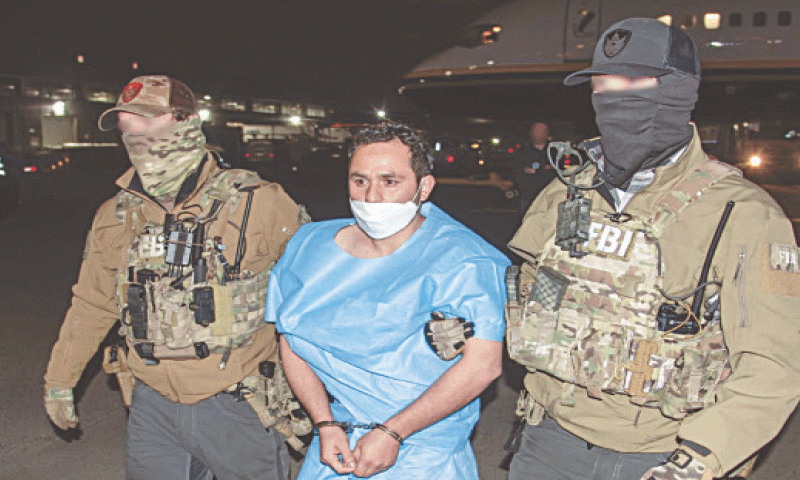
THE question arises: why are the Afghan Taliban critical of the arrest of IS-K terrorist Sharifullah, alias Jafar, if they have no connection with him?
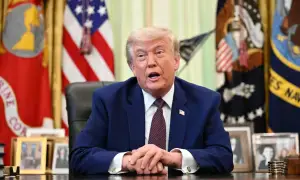
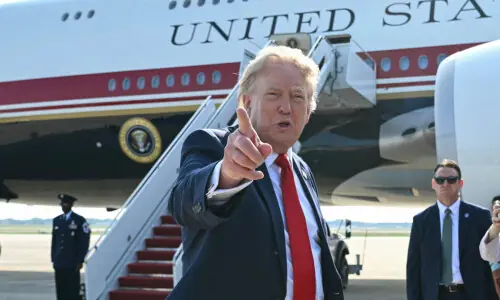
The arrested regional Islamic State leader was linked to the 2021 attack at the Kabul airport, which killed 13 American service members and dozens of Afghan civilians. President Donald Trump’s acknowledgement during the State of the Union address of Pakistan’s efforts in capturing the alleged mastermind behind the Abbey bombing was a significant development. It signalled a potential future of enhanced counterterrorism cooperation between the US and Pakistan.
Surprisingly, Afghanistan’s intelligence agency, the General Directorate of Intelligence, reacted negatively to the arrest, dismissing Sharifullah as a ‘low-level operative’. To bolster its stance, the GDI alleged that ‘IS-K has safe havens in Pakistan’. It accused the Pakistani establishment of orchestrating the operation to strengthen ties with the new US administration.
However, the GDI failed to acknowledge that the individual arrested by Pakistan was an Afghan national who had previously been detained by the Ashraf Ghani government but released by the Taliban when the latter seized control of Kabul on Aug 15, 2021.
While media outlets investigate the details surrounding the arrest and the history of the Abbey bombing, the Afghan interim government’s defensive response following Trump’s praise of Pakistan suggests that the Taliban feel sidelined. Their reaction also hints at a concern that the US may take punitive measures against the Taliban regime for allegedly harbouring IS-K and Al Qaeda terrorists.
Notably, soon after the US troop withdrawal, Al Qaeda leader Ayman al-Zawahiri was killed in a US drone strike in Kabul’s secure zone near a Taliban minister’s residence. This incident underscored the Taliban’s lack of full control over state affairs despite their political takeover.
Afghanistan has been a battleground for over four decades for various factions seeking dominance. The Taliban themselves emerged from internal conflicts among mujahideen groups. As such, they cannot claim absolute authority over the country, particularly when ethnic and religious minorities continue to face violence in different Afghan cities, mainly at the hands of IS-K.
The Taliban must be reminded of their responsibility to apprehend and hold terrorists accountable.
The Taliban’s embarrassment whenever a terrorist group or its operatives are neutralised is understandable. Perhaps the Taliban leadership considers such incidents as a negative reflection on their rule. However, the Taliban should not forget that they remain under the purview of the UN Security Council’s 1988 sanctions committee, which enforces measures such as an arms embargo, travel bans, and asset freezes. These sanctions will remain in place until the Security Council decides otherwise.
The Taliban’s reluctance to acknowledge IS-K and Al Qaeda’s presence in Afghanistan stems from their ‘victory rhetoric’. Admitting that terrorists operate within their borders would undermine their narrative. However, they cannot deny that IS-K was responsible for recent terrorist attacks in Bajaur, Kerman, and Moscow.
Furthermore, under UNSC Resolution 2513, adopted on March 10, 2020, following the Doha Accords, the Taliban are obligated to comply with UN directives, including measures against terrorist entities operating from Afghan territory. The Taliban must be reminded of their responsibility to apprehend and hold terrorists accountable.
Additionally, the Taliban are bound by the Doha Agreement not to allow Afghan territory to be used for terrorism. Therefore, controlling the activities of the TTP is the sole responsibility of the Taliban authorities. The Taliban regime must not forget that the TTP was included in the sanctions list on July 29, 2011, under UNSC Resolution 1989 for its association with Al Qaeda, including its involvement in financing, planning, and executing terrorist activities. If TTP cadres roam around in Afghanistan, including the capital without checks, it is tantamount to connivance with a designated terrorist group.
Ultimately, the Taliban cannot absolve themselves of their obligations under international law. As long as they fail to address terrorism effectively, they will remain under scrutiny by the global community.
The Taliban regime must come out of denial mode to address global concerns about terrorism. That would be possible if the Taliban regime owned its responsibilities enshrined under the UN Charter and fulfilled the obligations stipulated in the UNSC resolutions. Given the shortcomings faced by the Taliban rulers in fulfilling their international obligations, it is all the more important for the Taliban to seek international cooperation to stamp out terrorist outfits from their land.
First, the Taliban regime will have to adopt an effective counterterrorism strategy. The Taliban regime will have to establish a dedicated counterterrorism task force to neutralise terrorist networks; improve intelligence-sharing mechanisms with regional and international partners; and enhance border security to prevent terrorists’ movement across the Afghan borders.
Second, the Taliban regime will have to conduct targeted operations against known terrorist hideouts; stop providing passive or active support to groups like the TTP and IS-K; and deny militants access to financial, logistical, and recruitment channels.
Third, it must comply with UNSC resolutions, including Resolution 2513 and the Doha Agreement; cooperate with international agencies like the UN and the Financial Action Task Force to prevent terror financing; collaborate with neighbouring countries like Pakistan, China, Iran, and the Central Asian states to address cross-border terrorism; and participate in regional counterterrorism initiatives such as the Shanghai Cooperation Organisation.
Fourth, the Taliban regime will have to sever any ideological or logistical ties with Al Qaeda, TTP, Etim and IS-K; expel foreign militants using Afghan soil to plan attacks on other countries, and demonstrate a clear stance against terrorism to gain international legitimacy.
Hopefully, Sharifullah’s arrest and prosecution would sound alarm bells for the Taliban leadership to come out of their state of denial and, instead of indulging in blame games, become a partner in counterterrorism efforts.
The writer is Pakistan’s former special representative for Afghanistan. He has also served as an ambassador to Iran and the UAE. and is a senior research fellow at the Islamabad Policy Research Institute.
Published in Dawn, March 19th, 2025