Trump’s plan to displace Palestinians ‘taking shape’, says Israeli minister



JERUSALEM/GAZA CITY: Israel’s far-right Finance Minister Bezalel Smotrich said on Sunday that US President Donald Trump’s plan to remove Palestinians from war-battered Gaza was “taking shape”, despite widespread rejection by governments in the region.
“This plan is taking shape, with ongoing actions in coordination with the (US) administration,” Smotrich told an event in the Israeli parliament, adding that preparations were underway to form a managing body that would oversee displacement.
“This has the potential to create a historic change in the Middle East and for the state of Israel,” said Smotrich, who has repeatedly backed resuming the attacks against Hamas and has expressed support for re-establishing permanent Israeli presence in the territory.
The plan proposed by Trump would require finding countries willing to take in at least some of the Gaza Strip’s 2.4 million people, Smotrich noted.
Tel Aviv decides to cut off electricity to the devastated territory ‘immediately’
“It involves identifying key countries, understanding their interests — both with the US and with us — and fostering cooperation,” he said.
Implementing the plan, which other Israeli leaders have welcomed but Palestinians, Arab governments and some world leaders have condemned, would be a massive logistical operation, said Smotrich.
Trump plan
Experts have said that forcibly removing Gazans would amount to a violation of international law. Just days after he took office, Trump triggered global outrage when he suggested the US take over Gaza and turn it into the “Riviera of the Middle East”, while forcing its Palestinian inhabitants to relocate to neighbouring Egypt and Jordan.
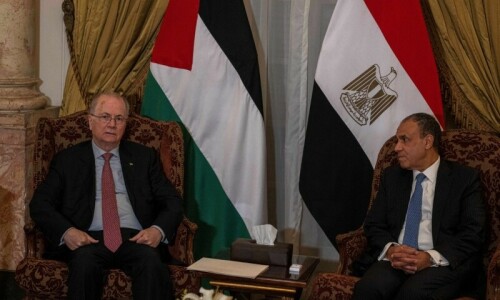
Last week, an Arab counterproposal to Trump’s plan was put forward, with several Islamic nations and European governments endorsing it.
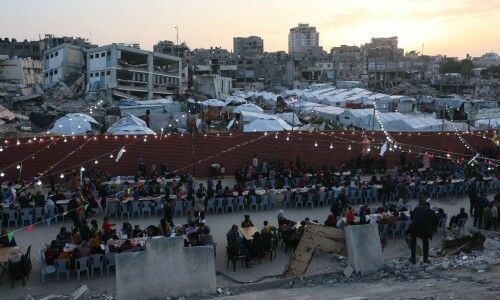
The Arab proposal aims to rebuild Gaza without displacing Gazans, who endured more than 15 months of devastating conflict before a fragile ceasefire took effect on January 19.
Last week, US President Donald Trump threatened further destruction of Gaza if all remaining prisoners were not released, issuing what he called a “last warning” to Hamas leaders.
He also alluded to repercussions for all Gazans, telling them: “A beautiful Future awaits, but not if you hold Hostages. If you do, you are DEAD!” Hamas said Trump’s threats would only encourage Israel to ignore the terms of the truce.
Trump had previously floated a widely condemned plan to expel Palestinians from Gaza, prompting Arab leaders to offer an alternative. Their proposal would see Gaza’s reconstruction financed through a trust fund, with the Ramallah-based Palestinian Authority returning to govern the territory.
Relocation scheme
“Just to give you an idea — if we remove 10,000 people a day, seven days a week, it will take six months,” he said.
“If we remove 5,000 people a day, it will take a year. Of course, this is assuming we have countries willing to take them, but these are very, very, very long processes.”
Trump’s Middle East envoy Steve Witkoff said the Arab plan was a “good-faith first step from the Egyptians”, even as other Israeli and US officials have expressed reservations.
Smotrich said he was pushing for Trump’s plan to happen, calling it “an opportunity to bring an end to the conflict” between Israel and the Palestinians.
Since Israel’s creation in 1948 and “until today, we have been dragging this along for 76 years, searching for solutions… With the current (US) administration, we will do much more.”
Electricity cutoff
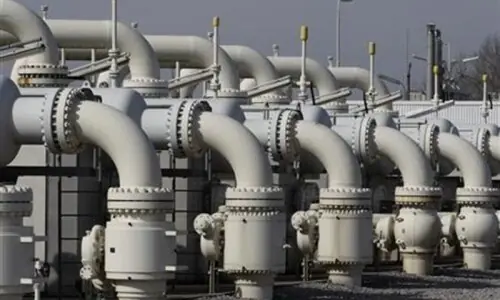
Israel’s Energy Minister Eli Cohen said on Sunday he had given instructions to stop supplying electricity to Gaza, a week after Israel blocked all aid into the war-ravaged Palestinian territory. The move has echoes of the earliest days of the conflict when Israel announced a “siege” that included an electricity cutoff to Gaza.
“I have just signed the order to stop supplying electricity immediately to the Gaza Strip,” Cohen said in a video statement, adding: “We will use all the tools at our disposal to bring back the prisoners and ensure that Hamas is no longer in Gaza the day after” the conflict.
The only power line between Israel and Gaza supplies the territory’s main water desalination plant, which serves more than 600,000 people.
Gazans depend mainly on solar panels and fuel generators for their electricity. The connection to the desalination plant was cut off after the Oct 7, 2023, before being reconnected in July 2024. But the plant was unable to resume operations until December that year, as the power lines had been too badly damaged by the war.
Last weekend, Israel announced it was blocking aid deliveries to Gaza until Palestinians accepted its terms for an extension of the ceasefire which had largely halted more than 15 months of fighting. The first phase of the truce, which ended on March 1, had enabled the entry of vital food, shelter and medical assistance.
Israeli media reported on Monday that Netanyahu planned to exert “maximum pressure” on Hamas in the coming week to accept an extension of the first phase under Israel’s terms.
Public Broadcaster Kan said Israel has drafted plans to ramp up pressure under a scheme dubbed the “Hell Plan”.
This included following up the aid block with “displacing residents from the northern Gaza Strip to the south, halting the supply of electricity and a resumption of full-scale fighting.”
Published in Dawn, March 10th, 2025