Milk is more than just a household staple — it is a vital source of nutrition for millions, particularly children, women, and the elderly. However, the imposition of an 18 per cent general sales tax (GST) on packaged milk in the last fiscal budget threatens to make this essential commodity unaffordable for many families. This move not only places an economic strain on households but also risks exacerbating the country’s already alarming malnutrition crisis.
It is a fundamental source of calcium, protein, and essential vitamins that support physical and cognitive development. According to the United Nations International Children’s Emergency Fund Pakistan, 40pc of children under five suffer from stunted growth due to malnutrition, while over 54pc of women and girls are anaemic due to iron deficiencies. Ensuring affordable access to safe, hygienic milk is crucial in addressing these nutritional deficiencies.
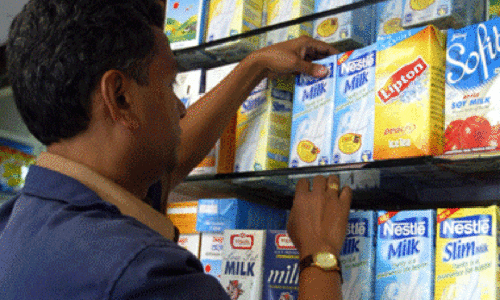
The price hike resulting from the 18pc GST has pushed the cost of packaged milk close to Rs350 per litre, significantly burdening low- and middle-income households. The Pakistan Dairy Association (PDA) estimates that 64pc of packaged milk consumers earn below Rs50,000 per month, making this price increase unsustainable for a vast majority of Pakistanis.
The price hike resulting from the 18pc GST has pushed the cost of packaged milk close to Rs350 per litre, significantly burdening low- and middle-income households
According to a Federation of Pakistan Chambers of Commerce & Industry (FPCCI) report, Pakistan’s taxation on packaged milk is among the highest in the world. In contrast, leading economies such as the United States, Canada, Australia, Bangladesh, and the United Arab Emirates impose no tax on milk. Even in countries where milk is taxed, the rates remain significantly lower — Sri Lanka applies an 8pc value-added tax, the United Kingdom a 9pc tax, and Germany only a 7pc tax. In comparison, Pakistan’s 18pc tax is an outlier, creating unnecessary financial hardship and threatening food security.
The FPCCI report also presents a compelling scenario highlighting the stark contrast between rising milk prices — driven by excessive taxation — and Pakistan’s low per capita income. This widening gap threatens affordability, putting citizens’ health at risk.
The formal dairy sector, which ensures high-quality, hygienic milk production, is already experiencing a 20pc decline in sales due to the tax burden. While the formal dairy sector bears the burden of taxation, the informal sector operates without contributing anything to the national exchequer. As per a recent media report, this downturn has forced 500 milk collection centres to shut down, affecting 35pc of dairy farmers.
The formal dairy sector is already experiencing a 20pc decline in sales due to the tax burden forcing 500 milk collection centres to shut down, affecting 35pc of dairy farmers
With the shift toward the unregulated loose milk market, many farmers are now selling milk at a loss of Rs10-15 per litre. As per the PDA, loose milk, which constitutes more than 90pc of Pakistan’s total milk consumption, often lacks pasteurisation, proper storage, and quality control, posing serious health risks, a policy that discourages formal sector dairy production and directly increases the consumption of unsafe milk.
The government must recognise milk as a fundamental necessity rather than a luxury. The PDA and other industry experts have urged policymakers to reduce the GST from 18pc to 5pc, which would restore affordability for millions of households, increase milk consumption to help combat malnutrition, sustain the formal dairy sector to ensure a safe and hygienic milk supply and align Pakistan’s taxation policy with global best practices.
A tax cut would provide immediate relief to struggling families, demonstrate a commitment to public health, and support economic stability within the dairy industry.
Milk is not a privilege — it is a basic human necessity. Ensuring its affordability is not just a matter of economic policy but a moral and social obligation. If Pakistan is to address its malnutrition crisis and improve the well-being of its people, revising the tax structure on packaged milk must be a top priority.
The writer is a communications expert and maintains a keen interest in matters related to public policy, health and the economy
Published in Dawn, The Business and Finance Weekly, March 10th, 2025