‘Erratic’ cyclone creeps towards eastern Australia
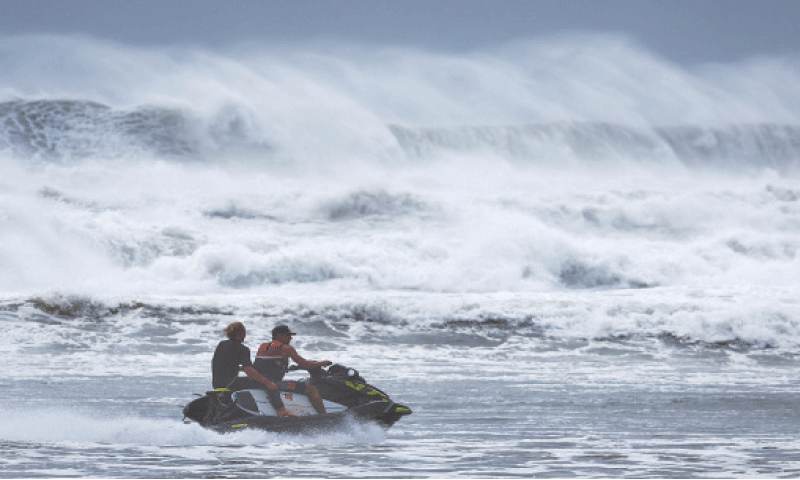

GOLD COAST: An “erratic” tropical cyclone lingered off Australia’s eastern coast on Thursday, bringing drenching rains and record-breaking waves to a heavily populated region rarely hit by typhoons.
Tropical Cyclone Alfred was 250 kilometres east of busy Brisbane city on Thursday afternoon, but government forecasts warned its slow and “erratic” crawl towards the mainland was growing difficult to predict.
Some four million people were in the firing line along a 400-kilometre stretch of coastline expected to see the worst of the storm. “We’re already seeing gales developing on the coastal fringe,” Bureau of Meteorology forecaster Sarah Scully said.
“There have been very large waves and powerful swells. That’s generated by Alfred lingering in the Coral Sea and creating a whole lot of wave energy.”
A 12.4-metre (40-foot) wave was recorded on the Gold Coast south of Brisbane, the largest swell ever picked up by that monitoring station. Daring surfers paddled out to catch the supercharged waves, ignoring the threat of US$10,000 fines for “reckless behaviour”.
“I am just staggered that people would be so stupid. It is a huge act of stupidity,” said acting Gold Coast mayor Donna Gates.
Wild weather
Alfred was initially forecast to strike land late on Thursday evening. But the slow-moving storm — churning towards the coast at just 7 kilometres per hour — was now more likely to make landfall late on Friday or early Saturday.
While this gave coastal hamlets more time to stack sandbags and stockpile food, Scully warned it also left them exposed to wild weather on the storm’s outer edges. “It will mean that the coastal areas are exposed for a longer period of time,” she said.
Published in Dawn, March 7th, 2025