Passing on atomic bomb memories
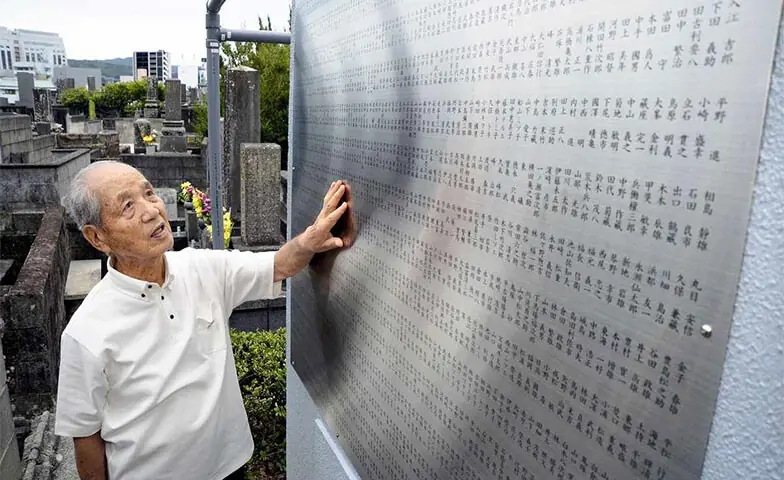

Eighty-one years have passed since the atomic bombs were dropped, and memories of the bombings are gradually fading.
Nuclear-armed nations are conducting military attacks against other countries, and some leaders are even hinting at the use of nuclear weapons. This is an unprecedented crisis.
As the only country to have suffered atomic bombings, Japan must convey both domestically and internationally the realities of the devastation caused by nuclear weapons and fulfill its responsibility to further strengthen the momentum towards nuclear disarmament.
The Peace Memorial Ceremony was held in Hiroshima, attended by representatives from a record 121 countries and regions.
Prime Minister Sanae Takaichi, who attended the ceremony, said, “Our country will continue its efforts toward the realisation of a ‘world without nuclear weapons.’” A ceremony in Nagasaki will be held on Sunday.
The number of hibakusha atomic bomb survivors nationwide has decreased by more than 70,000 over the past decade, falling to about 90,000. With the average age exceeding 86, the Japan Confederation of A- and H-Bomb Sufferers Organisations (Nihon Hidankyo) plans to decide around June 2027 whether to continue operating.
Opportunities to hear survivors’ testimonies firsthand are dwindling. The central and local governments must work with the private sector to urgently pass on these stories to the next generation.
This spring, graduate students from the University of Tokyo held an exhibition in New York, using virtual reality to create an experience in which participants could feel as if they were in Hiroshima immediately after the bombing. This use of the latest technology reportedly allowed the participants to truly grasp the scale of the devastation, and the approach is likely to be an effective new way to pass on the story.
This year marks the 30th anniversary of the Atomic Bomb Dome’s designation as a World Cultural Heritage site, but the structure continues to deteriorate due to exposure to wind and rain.
The Hiroshima city government began examining possible countermeasures this fiscal year. While ensuring the bricks and other materials used are similar to those from the time of construction, the city is considering methods of preventing water from seeping into the walls.
The Atomic Bomb Dome is a symbol of the atomic bombings. It is desirable to draw on the expertise of specialists in the search for appropriate methods of preservation.
There have been notable moves in the world that run counter to the goal of nuclear disarmament. The New Strategic Arms Reduction Treaty, which was signed by the United States and Russia as a continuation of a Cold War-era framework, has expired.
Due to disagreements between the United States, Russia and others over Iran’s nuclear program, the Review Conference of the Parties to the Treaty on the Non-Proliferation of Nuclear Weapons collapsed for the third consecutive time in May.
Japan is surrounded by China, Russia and North Korea, all of which are expanding their nuclear capabilities. Last month, China launched a submarine-launched ballistic missile capable of carrying nuclear warheads. To safeguard national security, Japan has no choice but to rely on the US “nuclear umbrella.”
Japan has suffered immense damage from nuclear weapons and remains exposed to nuclear threats from neighboring countries. It is significant that a country facing such a harsh environment continues to advocate for the realisation of a world without nuclear weapons at the United Nations and other forums.
Published in Dawn, August 10th, 2026