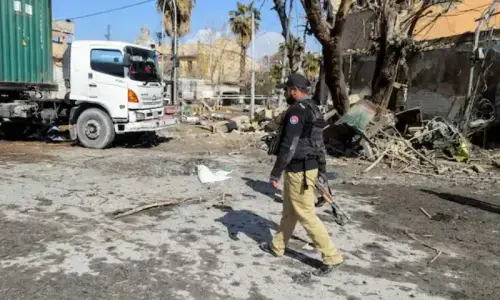
YESTERDAY’S devastating terrorist attack in Harnai, which killed at least 11 coal miners and injured seven others, is a reminder of the multiple hazards these workers confront. Coal miners in the region already contend with treacherous working conditions — labouring in poorly ventilated shafts, risking cave-ins, and facing chronic health issues. Clearly, they must also fear for their lives on their way to work. The attack, targeting labourers from KP, is not an isolated incident. Harnai’s coal mining community has fallen victim to both industrial accidents and terrorist violence. These miners, who leave their families behind to work in appalling conditions for minimal wages, represent some of Pakistan’s most vulnerable workers. Their targeting speaks to a broader crisis of security and governance in Balochistan. The security situation in Balochistan stems from historical grievances, economic marginalisation, and strategic neglect. Despite being Pakistan’s richest province in terms of natural resources, Balochistan has always lagged in development indicators. Successive governments have approached the province through a security-centric lens, failing to address issues of economic disparity, political representation, and social development. The province’s porous borders with Afghanistan and Iran have made it vulnerable to cross-border terrorism. However, the root causes run deeper. Decades of centralised decision-making have left the residents feeling disconnected from the development process. The exploitation of natural resources without proportionate benefit to local people has fuelled resentment, which militant groups exploit.
The state must move beyond purely military solutions and implement an agenda, which includes meaningful local participation in resource management, investment in education and healthcare, and creation of economic opportunities beyond extractive industries. The federal government must ensure fair resource distribution and give Balochistan’s elected representatives genuine authority in decision-making. Furthermore, specific attention must be paid to protecting vulnerable workers. Mining operations need enhanced security protocols, and intelligence gathering must be strengthened to prevent attacks. Sustainable peace will only come through addressing the underlying socioeconomic grievances. More than mere condemnation, the blood of these miners demands a fundamental shift in how the state approaches Balochistan’s challenges.
Published in Dawn, February 15th, 2025