HYDERABAD: The Sindh Abadgar Board (SAB) has opposed the provincial government’s unilateral decision of not fixing the support price of wheat crop while describing the construction of six canals on Indus river as against the interest of the country. It vowed to continue its ongoing struggle against the canals.
The SAB discussed various issues in its monthly meeting held on Sunday under the chairmanship of its president Mahmood Nawaz Shah.
It said the Sindh government’s decision of deregulating wheat crop would affect its productivity as well as cultivation. Briefing the meeting, the SAB president talked about his interaction with the representatives of the federal government and international bodies and added that the government had already started executing that deregulation plan from the last year.
He said that deregulation regime and strict conditions remained one sided whilst growers failed to export their commodities. He said the export market remained closed and added that the cost of inputs had increased manifold in the last couple of years.
Shah Nawaz informed that in the domestic market, the prices of commodities had plummeted significantly. Currently, he said, tomato producers were bearing losses as nobody was willing to buy tomatoes for Rs8 per kg, which was failing growers to recover their input cost. He observed that since the prices of commodities had declined, therefore, the growers had cumulatively borne the losses of Rs1.25 billion.
The meeting noted that if the government wanted the deregulation, that policy should cover prices of pesticides, input, diesel and crop’s rates. It said that such unilateral decision was just detrimental to the farm sector. It said that there should be no ban on the movement and export of crops.
It wondered how could the growers bear the higher input cost and then simultaneously sell their produce at the lower market rates.
The SAB said that wheat was the staple food of the country as it ensured food security, therefore, no decision should be taken in haste. The meeting said it could prove to be counterproductive.
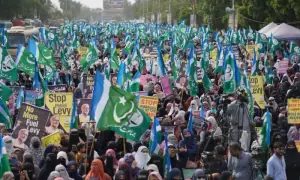
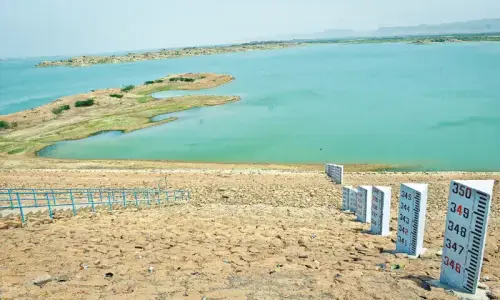
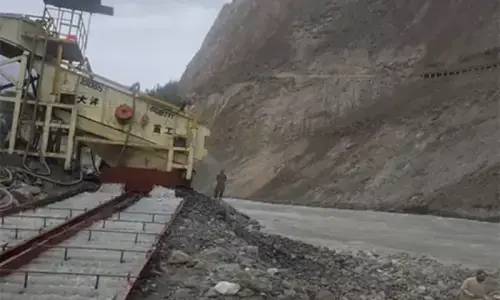
The board also pointed out that the six canals were not in the interest of the country, considering the fact that Sindh was already facing water shortage for the last several years. It said the tail-end areas of the province faced chronic water shortage and even then those canals were built on Indus river and in that case Sindh would be deprived of water completely.
It said that irrigating one part of the country and depriving other parts of irrigation water was illogical completely. It said that such decisions would not be accepted. It said that those canals were not only detrimental to Sindh, but for the entire country and the SAB would continue its struggle against those canals.
Published in Dawn, February 3rd, 2025