0
0

GILGIT: The sit-in on the Karakoram Highway in Aliabad, which began on Jan 3, was called off on Wednesday after the federal government assured the protesters of providing electricity for five hours to Gilgit-Baltistan through thermal generators during January and February.
The federal government also agreed to provide funds to the government of Gilgit-Baltistan for the purchase of fuel to operate thermal generators in areas badly affected by loadshedding.
On Wednesday, a complete shutterdown strike was observed in Hunza and a large number of people from other towns in the region joined the protesters. A significant number of women also took part in the protest.
The call for protest was given by the Hunza Awami Action Committee and the All Parties Traders against abnormally long power cuts, often stretching up to 22 hours.
Most of the agitators used to brave temperatures below freezing, spending the night at their camps. The protests kept the Karakoram Highway closed to traffic for almost a week, causing misery to locals and travellers.
Vehicles loaded with goods imported from China via Khunjerab Pass remained stranded for one week.
Many rounds of unsuccessful negotiations were held between government representatives and organisers of the protest.
Meeting in Islamabad
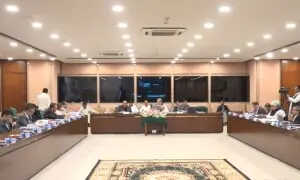
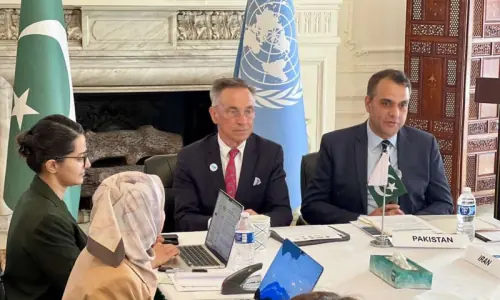
According to the federal ministry for Kashmir Affairs and Gilgit-Baltistan, a high-level meeting was held at the interior ministry in Islamabad on Wednesday to address the demonstrators’ grievances.
The meeting was attended, among others, by GB Governor Syed Mehdi Shah, Chief Minister Haji Gulbar Khan and Chief Secretary Abrar Ahmed Mirza.
The chief minister sought additional funds from the centre to operate thermal generators.
It was unanimously decided that uninterrupted power supply to Gilgit-Baltistan for at least six hours would be ensured in January and February through diesel generators.
“The electricity supply for Gilgit-Baltistan depends on hydropower projects; in winter the supply falters due to a fall in water flow from rivers. Therefore, an alternative solution is to operate thermal generators. But the cost of running these is prohibitive,” Gulbar Khan said.
The chief minister sought a financial grant from the federal government for operating diesel generators during winter to overcome the power crisis.
After the approval of funds to operate thermal generators, top officials held negotiations with the sit-in organisers in Hunza, assuring them that their demands had been accepted.
The assurance prompted the organisers of the protest to call off their six-day-long sit-in. Traffic then resumed on the Karakoram Highway after the protesters left.
Published in Dawn, January 9th, 2025