Healthcare reset

PAKISTAN’S $7 billion IMF arrangement creates an unprecedented opening to transform its fragmented healthcare system into a catalyst for institutional renewal. The convergence of economic stabilisation, political realignment, and modernisation imperatives presents policymakers with a rare opportunity to transcend governance paralysis through targeted reform.
Recent indicators signal Pakistan’s economic resilience. Inflation has moderated to 4.9 per cent, foreign reserves have increased to $16.4bn, and the current account surplus has increased to $729 million. Yet, this stabilisation masks deeper institutional challenges that healthcare reform could help address. As Michael Kugelman of the Wilson Centre argues, “Pakistan requires solutions that can rebuild public trust while working within existing power structures.”
The strategic implications are significant. Pakistan’s military-civilian governance dynamics complicate reform implementation. However, healthcare transformation offers a unique platform for demonstrating institutional effectiveness. The disputed February 2024 elections heightened political tensions but also revealed widespread public demand for improved service delivery. This creates an opening for reforms that can strengthen both healthcare outcomes and institutional credibility.
Improving healthcare access could boost GDP by 1.5-2pc.
Market evidence underscores the urgency. Pakistan’s healthcare workforce density of 4.69 doctors and 1.2 nurses per 10,000 population falls 70pc below WHO recommendations. Digital infrastructure reaches only one-third of the population, limiting telemedicine potential. Yet comparable markets show rapid progress is possible through targeted intervention. Digital health initiatives have reduced delivery costs by 15-20pc while expanding access in underserved regions. Recent pilot programmes in primary care digitisation show promising results in improving both efficiency and outcomes.
Three imperatives emerge for policymakers. First, healthcare reform requires careful orchestration within Pakistan’s complex institutional environment. Rather than challenging existing power structures, reform can showcase their ability to deliver positive change. The military’s operational capabilities and the civilian government’s policy expertise become complementary rather than competitive.
Second, economic stabilisation and healthcare transformation must proceed in tandem. The IMF arrangement provides fiscal discipline, but also demands strategic resource allocation. Evidence suggests successful reform requires balancing immediate constraints with infrastructure investment. As Oxford economist Adeel Malik notes, “Healthcare access has become a critical economic issue for Pakistan’s squeezed middle class.” The link between health outcomes and economic productivity makes healthcare reform central to sustainable growth.
Third, sustainable reform depends on building consensus across Pakistan’s fragmented political landscape. International experience shows that healthcare transformation succeeds when positioned as a national imperative transcending partisan divisions. This requires engaging military leadership, civilian institutions, and opposition parties through clear governance frameworks and measurable outcomes. Success stories from comparable markets show that inclusive stakeholder engagement leads to more resilient reforms.
Implementation demands precise sequencing. The initial focus should strengthen primary care delivery while establishing digital infrastructure. This foundation enables the next expansion of specialty services and value-based care models. Throughout, stakeholder communication must emphasise healthcare reform’s role in building institutional credibility and national resilience. Regular progress monitoring against clear metrics ensures accountability and maintains reform momentum.
The economic implications are substantial. Research indicates that improving healthcare access could boost GDP by 1.5-2pc annually through enhanced workforce productivity. The multiplier effects of healthcare investment in digital infrastructure and workforce development create more growth opportunities. International investors view healthcare system quality as an indicator of market attractiveness.
Pakistan’s policymakers face a clear choice. They can allow healthcare challenges to perpetuate governance dysfunction, or seize this moment to prove institutional capacity for positive change. Success requires sustained commitment and recognition that healthcare transformation is an opportunity to strengthen both public health and national unity. The strategic imperative is clear — the time for decisive action is now.
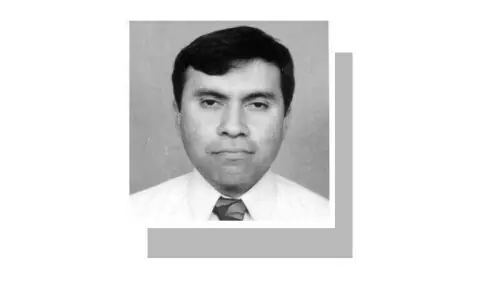
The writer is a Fellow of the UK’s Royal Society of Medicine, Royal Society of Arts and ICAEW, has advised the Saudi National Transformation Programme and led private equity healthcare groups.
Published in Dawn, January 4th, 2025