THOUGH Pakistan-US relations have rarely been straightforward, a sensational claim by an American official, and US sanctions targeted at Pakistani public and private entities, have thrown up several questions about the relationship’s future.
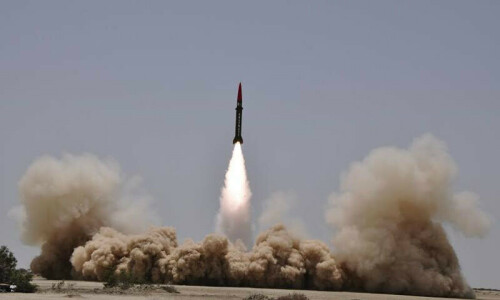
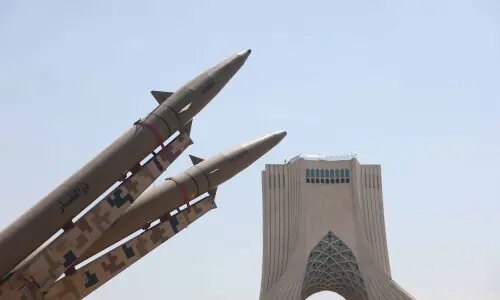
Speaking at the Carnegie Endowment for International Peace, US Deputy National Security Adviser Jon Finer claimed that Pakistan’s ballistic missile technology posed an “emerging threat to the United States” and that one day Pakistani projectiles could strike targets in America. The controversial comments came after the US had sanctioned the National Development Complex, responsible for the country’s missile programme, as well as three Karachi-based firms. The Foreign Office termed the sanctions “discriminatory” and said such moves had “dangerous implications”.
No responsible Pakistani official has ever threatened to lob missiles at the US. Moreover, there have been no credible reports, or even suggestions, that Pakistan has built or tested such long-range projectiles capable of hitting US shores. Besides, allies do not sanction allies, and such strong allegations are not made public against friendly states. It is also strange why an official of a lame-duck administration would make such sensitive claims in the midst of a political transition.
Some analysts have said it is possible that Mr Finer was singing from the Indian hymn sheet; after all, the US has transferred advanced weapons technology to New Delhi, yet it feels ‘threatened’ by Pakistan’s missiles. Instead of making such outlandish remarks at a public forum, the Americans should have used discreet diplomatic channels to communicate their concerns.
The aforementioned developments do not inspire confidence about the future of Pakistan-US ties. As team Trump arrives in the White House in a few weeks’ time, it is unlikely Pakistan will be high on its list of priorities, with the Ukraine and Middle East conflicts, as well as China, likely to top Donald Trump’s foreign policy agenda. Moreover, considering Mr Trump’s mercurial nature, and depending on who has his ear, it is difficult to predict what his attitude towards Pakistan will be. In all likelihood, Pakistan and the US will continue to be ‘frenemies’, cooperating where necessary, but differing widely on key strategic matters.
Islamabad should, of course, attempt to maintain cordial ties with Washington, but must be ready for more claims such as the one made by Mr Finer. This is especially true if the US pivots completely towards India, and continues to prop up our eastern neighbour as a counterweight to China. Though talk of maintaining neutrality is great, if the US decides to openly take on China — which the American establishment has dubbed the greatest threat to its global hegemony — Pakistan’s policymakers will have to make some very tough choices. Though Pakistan should not seek to join any geopolitical blocs, policy must be guided by national interest.
Published in Dawn, December 21st, 2024