0
0


EXCEPT for the 92.97-metre javelin throw by our spirited lad from Mian Channu, Pakistan has been left behind the rest of the world, economically, technologically, and on all counts of the 17 Sustainable Development Goals — by a margin of many decades. The road to Pakistan’s progress has been firmly blocked by its own misgovernance, runaway population, structure and leadership. The need for reforms to reconstruct and transform Pakistan has never been more compelling.
The first task for Pakistan, the world’s fifth most populated country, is to apply harsh brakes on its runaway population. The daily arrival of 17,554 new babies nullifies all intended reforms and resources. A complete breakdown is a mathematical inevitability. Sitting on a volcanic total fertility rate of 3.55, we have failed to appreciate a potentially fatal affliction. While population management ought to have been the mother of all reforms, its absence from all political manifestos is incomprehensible.
We need to create national and provincial population task forces and provide universal access to family planning and reproductive health services. Lessons can be learnt from strategies adopted by Iran and Bangladesh, who brought their TFRs to less than 2.0.
The current National Finance Commission Award incentivises provinces to increase their population in order to receive a bigger share of the 82 per cent funds allocated on the basis of population numbers. This approach is irrational and counterproductive. On the contrary, there ought to be an incentive to reduce or stabilise the population. This can be done by allocating a percentage of the population fund for the extent of reduction demonstrated in the population growth rate. Likewise, the Benazir Income Support Programme could be made far more meaningful by linking it with family planning-related incentives.
We must begin by cutting wasteful expenditures.
The next most serious issue for Pakistan is the size of its federating units. As compared to any other country, our provinces are too large and too few. The population of Punjab exceeds the population of 181 countries and the population of Sindh exceeds the population of 165 countries of the world. No wonder we find them impossible to govern. We could improve governance, promote development and increase people’s participation manifold by creating at least 22 smaller administrative units, instead of having the existing four unmanageable provinces.
The 22 suggested smaller administrative units could be: Makran, Lasbela, Kalat, Sibi, Quetta, Karachi, Hyderabad, Larkana, Sukkur, Bahawalpur, D.G. Khan, Multan, Lahore, Gujranwala, Faisalabad, Sargodha, Rawalpindi, D.I. Khan, Peshawar, Hazara, Malakand and the erstwhile Northern Areas. Even after reducing the size, the average population of the proposed 22 provinces would still be more than the population of 106 countries of the world. This reform is fundamental to sharing governance and benefits at the local level.
The third crucial reform that could lead to strengthening of institutions and eliminating dependence on personal loyalties would be to do away with the culture of extensions for all office holders — whether they be political, judicial, military or civil bureaucrats. Limit all assignments, including that of the president and the prime minister, to one term only. Except for the election of the PM, all other heads of institutions — judicial, military or civil — must be appointed on the basis of seniority alone. This would eliminate the perpetual palace intrigues, bribes, favours and twisting of laws that our rulers primarily remain preoccupied with.
The fourth essential structural reform calls for massive reduction of our obscene economic and social inequality. Paying over Rs2 million per month to the judges while giving less than Rs20,000 to the sanitation workers is grossly unethical. It is cruel to give a pension of over Rs400,000 to thousands of senior government officials, while not registering 81m workers to their legally entitled pension scheme called EOBI.
Begin by dismantling bureaucracy and cutting wasteful expenditures. Withdraw the 150,000 or so official vehicles, office TVs, free fuel, security, electricity, and other perks of all serving and retired government officials.
Every official must receive a flat salary that has none of the dozen or so hidden allowances that inflate their earnings manifold. Withdrawing all benefits, perks, privileges, and entitlements of Pakistan’s disproportionately pampered class would generate enough funds to ensure minimum legal wage, social security and EOBI for every worker of Pakistan.
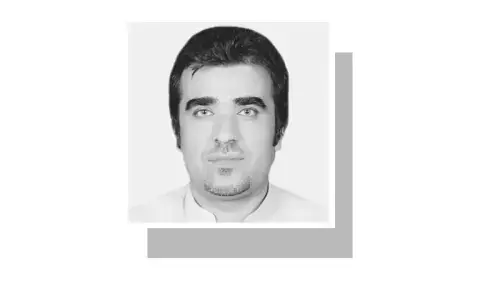
The writer is an industrial engineer and a volunteer social activist.
Published in Dawn, November 30th, 2024