Petrol, diesel prices may stay mostly unchanged



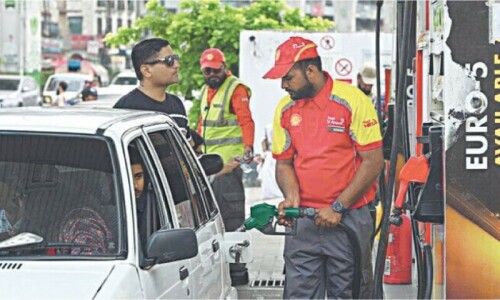
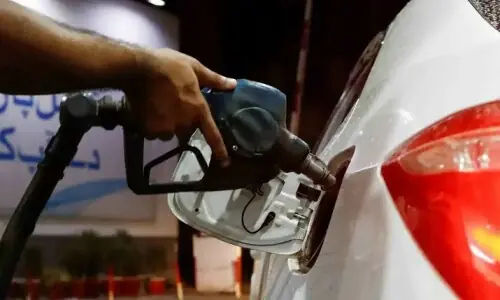
ISLAMABAD: The prices of major petroleum products are estimated to remain mostly unchanged for the next fortnight ending December 15 owing to a negligible change in international prices and a minor gain in the exchange rate.
Informed sources said the average prices of petrol and high-speed diesel (HSD) had slightly increased in the international market in the last fortnight. Import premium on both petrol and diesel remained unchanged. The exchange rate moved slightly in favour of the rupee.
As a result, the latest calculations as of Nov 28 showed around Rs3 per litre increase in the prices of petrol, HSD and kerosene, despite a slight decline seen in international prices for the last two days of the month.
An Ogra official said the price difference was so close that it could be adjusted within the inland freight equalisation margin (IFEM) — a mechanism actually meant for uniform prices across the country. “In any case, the increase in prices is expected to be less than Rs3 per litre,” he said.
The ex-depot petrol price currently stands at Rs248.38 per litre while that of HSD at Rs255.14. For the current fortnight, the government had kept unchanged the prices of all petroleum products on Nov 15, although the prices of petrol and HSD increased by Rs3.85 and Rs1.35 per litre, respectively, on Oct 31.
Petrol is mostly used in private transport, small vehicles, rickshaws and two-wheelers and has a direct bearing on the budget of middle- and lower-middle class.
On the other hand, most of the transport sector runs on HSD. Its price is considered inflationary as it is mostly used in heavy transport vehicles, trains and agricultural engines like trucks, buses, tractors, tube-wells and threshers, and particularly adds to the prices of vegetables and other eatables.
At present, the government is charging about Rs76 per litre tax on both petrol and HSD. Although general sales tax is zero on all the petroleum products, the government is charging Rs60 per litre petrol development levy (PDL) on both petrol and HSD that normally impact the masses.
The government is also charging about Rs16 per litre customs duty on petrol and HSD, irrespective of their local production or imports. In addition, about Rs17 per litre distribution and sale margins are going to oil companies and their dealers.
On the other hand, it is charging Rs50 per litre on light diesel and high octane blending component and 95RON petrol used by the wealthy in luxury imported vehicles.
Published in Dawn, November 29th, 2024