Acute food insecurity drops in year’s second half: report


 0
0


ISLAMABAD: With slightly improved availability of food, the number of people facing high levels of acute food insecurity has decreased during the second half of 2024, according to the Integrated Food Security Phase Classification analysis.
The analysis projected improvement in food availability during the last half of 2024, between monsoon season and post-harvest, decreasing the number of individuals expected to face acute food insecurity to 7.9 million.
About 8m people were projected to face high levels of acute food insecurity during the first half of 2024, largely attributed to climate shocks, food access constraints, livestock mortality, and reduced livelihoods.
According to the ‘Pakistan Assistance Overview’ released by the Bureau for Humanitarian Assistance of USAID, the bureau provided nearly $16m to Pakistan to support early recovery, risk reduction and resilience activities to strengthen vulnerable populations’ resilience to disasters induced by natural hazards. With this funding, the BHA of USAID supports livelihood-strengthening activities, including facilitating training on livestock management practices.
Bureau’s partner organisation, provided cash grants and capacity-strengthening training for women to diversify livelihood sources through fruit and vegetable processing and preservation. With BHA support, the Agency for Technical Cooperation and Development provided capacity-strengthening, cash grants and in-kind support to small-scale farmers with on-farm and off-farm livelihoods.
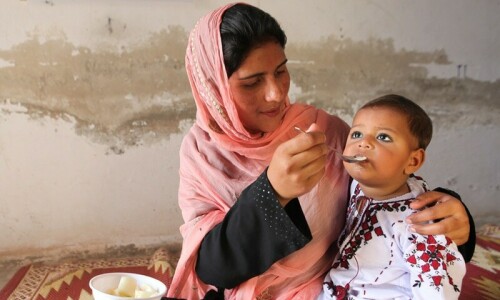
BHA provided $5.3m in nutrition support to prevent and treat acute malnutrition in Pakistan during fiscal year 2024. Bureau’s partners, World Health Organisation and Unicef treated more than 25,700 individuals for acute malnutrition by providing ready-to-use therapeutic food and supporting infant and young children feeding practices across Balochistan and Sindh provinces.
In tandem with BHA funding, the World Food Programme (WFP) implemented a community-based approach to treat and manage acute malnutrition among children and pregnant and lactating women. WFP’s strategy aims to fortify the capacity of local and national health systems as well as enable local communities to identify and manage acute malnutrition.
Published in Dawn, November 21st, 2024