AFTER Pakistan floated the idea of ‘climate diplomacy’ to tackle cross-border pollution in light of smog which has engulfed vast tracts of India and Pakistan, a US official indicated on the sidelines of COP29 that the White House may throw its weight behind any initiative taken in this regard.
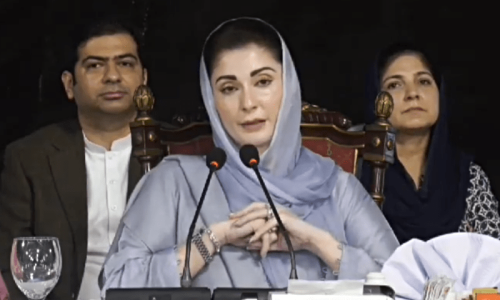
Last month, Punjab Chief Minister Maryam Nawaz expressed her government’s intention to approach India to jointly counter the air pollution, which mostly comes from vehicular and industrial emissions, and is exacerbated in winter due to stubble burning.
Talking to Dawn on the sidelines of COP29 in Baku, Ali Zaidi — national climate adviser to the Biden administration — said the US was “100 per cent supportive” of partnership-based approaches to tackle problems that cannot be solved in isolation.
“In the US, we have this thing called the ‘good neighbour rule’, which governs smog. It actually was developed when we witnessed exactly this phenomenon in the US. So you know when it comes to cross-border pollution and cross-border issues, we are 100pc suportive of partnership-based approaches to tackle problems that cannot be solved on their own,” he said in response to a question about smog, which has made life unbearable for millions in Pakistan.
The White House official said the US was already active in the Hindu Kush — often referred to as ‘The Third Pole’ for housing the most glaciers in the world outside the polar regions — to better coordinate the mitigation response, because environmental impacts from glaciers do not isolate themselves to one jurisdiction.
“I think the regional solutions are a necessary complement to this sort of multilateral dialogue,” he said, referring to the COP summit.
The adviser said regional cooperation among relevant parties to address climate change would have more impact than putting “another ornament on a 1,000-page document (COP)”.
In response to a question about the failure of the world to help Pakistan after the 2022 floods caused damages to the tune of $30 billion, he said the global community needed to reinvent its approach to rebuilding from disasters, particularly by investing in pre-disaster mitigation.
According to the White House official, the US took a really long time to reengineer its thinking domestically in terms of building resilience into the recovery.
He favoured approaches that ran “consistent with the financial position” of states that needed to do rebuilding, saying there was a need to mobilise more countries to move more capital to help with adaptation and mitigation in these vulnerable countries.
In response to a question about the loan-laden climate finance framework, he said, “If you are targeting projects that have very clear cash flow and a strong counterparty then debt works just fine.”
He agreed some concessionary capital did need to come in depending on the technological aspect, the richness of the resources and the maturity of the market, while referring to India’s solar projects.
Vulnerable areas need significant grant-based aid, but there is still a need to figure out how to monetise risk reduction associated with adaptation finance and that’s why it was difficult to do. These places are going to soak up more grant-based finance, he said.
Speaking about the Trump-led US administration all set to take over from the Biden administration, he appeared optimistic, saying the states in the US will figure out how to provide the policy support even if the federal government stopped being part of it. About the US, he said it should remain part of the dialogue and be the author of the roadmap that will govern the contours of climate finance for decades to come.
Produced as part of the 2024 Climate Change Media Partnership, a journalism fellowship organised by Internews’ Earth Journalism Network and the Stanley Centre for Peace and Security.
Published in Dawn, November 14th, 2024