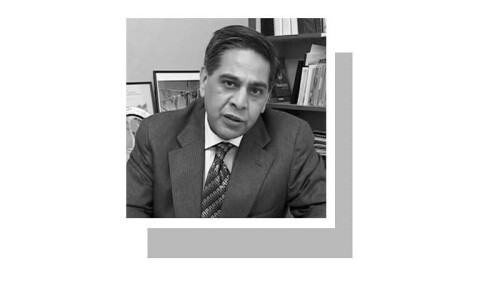
ISLAMABAD: Minister for Planning, Development and Special Initiatives Ahsan Iqbal has reiterated the government’s commitment to addressing pressing water management and food security issues.
He was speaking at a five-day international conference that brought together scientists, academics, government officials, representatives of development agencies and policy experts from home and abroad to discuss the country’s water issues, says a press release.
The conference is being organised by the International Water Management Institute (IWMI) Pakistan in collaboration with the Pakistan Council of Research in Water Resources (PCRWR) and the CGIAR Research Programme on Water, Land, and Ecosystems (WLE), along with the support of USAID, the FCDO, and Unicef.
Ahsan Iqbal said our water resources were vital for life and were the foundation for food security, economic stability and social well-being. He said water and food security were critical challenges of our time, affecting billions of people worldwide.
According to the World Bank, over 2.2 billion individuals lacked access to safe drinking water. In Pakistan, the situation is even more alarming. Our per capita water availability has significantly decreased from 5,600 cubic meters in the 1950s to under 900 cubic meters today, which is well below the water scarcity threshold of 1,000 cubic meters per person. Pakistan’s adaptation needs are estimated to be between $7 billion and $14 billion annually until 2050. Additionally, the country’s transition to renewable energy is projected to cost about $165 billion by 2040.
The minister said these figures highlighted the urgent need for significant investments in climate resilience and emphasised the importance of international support to help Pakistan tackle the increasing challenges presented by climate change.
Federal Secretary, Ministry of Water Resources, Syed Ali Murtaza stressed the urgent need to tackle the complex issues facing Pakistan’s water sector. During the discussion, he maintained that addressing these challenges requires comprehensive solutions beyond technical considerations.
Director General IWMI Mark Smith, a keynote speaker, highlighted that collaboration and innovative strategies were essential for achieving climate-resilient solutions in a world increasingly affected by climate change.
Director, Water, Food, and Ecosystem at IWMI, Dr Mohsin Hafeez said: “Water security is vital for Pakistan’s future. Through this event, we aim to bring together experts, policymakers, and community leaders to address the critical issues surrounding our water resources collaboratively.”
Dr Iskandar Abdullaev, the country representative of IWMI, and Simi Kamal, the Board Chair of IWMI, also spoke on the occasion.
Published in Dawn, November 6th, 2024