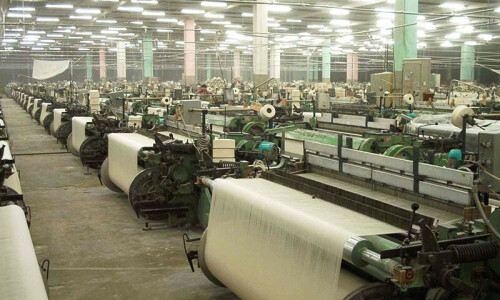
ISLAMABAD: The Pakistan Textile Exporters Association (PTEA) has criticised the government’s decision to discontinue gas supply to “highly efficient” captive power plants (CPPs) from Jan 1, 2025.
In a joint statement, PTEA Chairman Sohail Pasha and Patron-in-Chief Khurram Mukhtar said the entire textile value chain has invested billions of rupees in gas-based power plants for their own use.
Currently, 480 CPPs operate on the SNGPL network and 800 on the SSGC network.
These plants rely on stable and consistent power from reliable sources such as gas-based combined heat and power (CHP) systems, which help avoid voltage drops and fluctuations critical to textile operations.
They said that the inability of power distribution companies (Discos) to provide consistent and stable power due to outages and fluctuations will cause severe damage to highly automated machinery throughout the textile value chain.
CHP systems are the second-largest recipients of RLNG supply after the power sector. Mr Pasha and Mr Mukhtar said it is crucial to assess the suspension of gas supplies to CPPs and its potential impact on exports and overall energy costs. They warned that the decision could severely disrupt the $19 billion textile export industry and jeopardise millions of jobs.
The decision poses a looming threat to the sector and endangers the long-term international commitments made by the industry to supply value-added products, they added.
The association highlighted that the government has committed to long-term RLNG supply contracts and the decision to halt gas supply to CPPs will lead to a surplus of RLNG, resulting in significant losses for an already struggling sector.
Moreover, the lack of immediate alternatives could trigger mass closures within the industry.
It said that in-house power plants are integral to industrial processes, as they provide both power and steam simultaneously for industrial use. CPPs are much more efficient than government-owned power plants. The statement said it is unwise to conclude that power supplied through the grid network, which has transmission and distribution (T&D) losses, will be cheaper than power produced by CHP.
Published in Dawn, October 26th, 2024