0
0

WASHINGTON: The first round of talks on Tuesday between the visiting Pakistani delegation and international financial leaders and experts focused on the government’s initiatives for fiscal consolidation, revenue expansion, and reforms in energy and state-owned enterprises (SOEs).
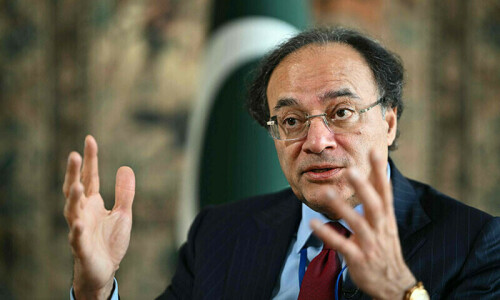
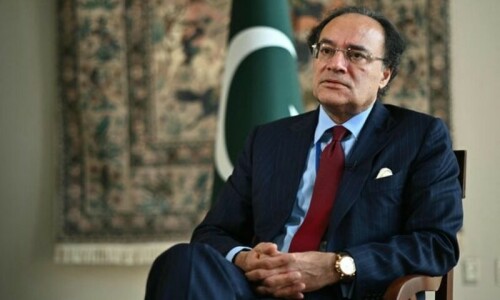
Finance Minister Muhammad Aurangzeb arrived in Washington on Monday evening to participate in the week-long annual meetings of the International Monetary Fund (IMF) and the World Bank, a day after proceedings had begun. Although his delegation arrived in Washington on Sunday, Mr Aurangzeb delayed his departure by a day to cast his vote on the constitutional amendments bill.
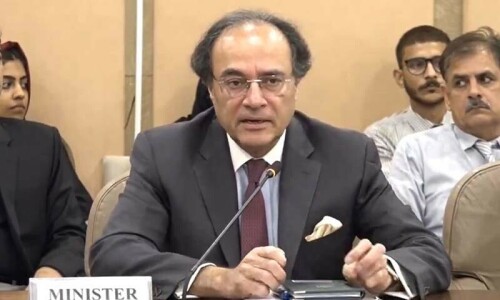
During his address to the G-24 Ministers and Governors Meeting, Mr Aurangzeb urged development partners to work closely to address the pressing challenges of climate change, population growth, and child stunting, particularly in developing countries like Pakistan.
Having assumed the position of Second Vice Chair of the G-24 Bureau for the fiscal year 2024-25, he emphasised the urgent need to tackle issues such as the heavy debt burdens on developing nations, the necessity of effective climate action, and the demand for enhanced representation of these countries within the Bretton Woods institutions.
On his first day, Mr Aurangzeb had bilateral discussions with his counterparts from Saudi Arabia and Turkiye. He also attended a G-24 ministers’ meeting and talked with senior officials from Citibank and the International Finance Corporation (IFC).
An official statement from the Pakistan Embassy in Washington highlighted that the primary goal of these discussions was “moving Pakistan from stabilisation to growth”.
In a meeting with Kenji Okamura, Deputy Managing Director of the IMF, the Pakistani delegation outlined several strategies to create more fiscal space. These included expanding the tax base, aligning the provincial agricultural income tax with the federal system, rationalising subsidies, streamlining the government, and reducing costs in the energy sector.
“Measures for stimulating private sector development and pursuing prudent monetary and external sector policies were also discussed. Steadfast implementation of reforms under the IMF extended fund facility (EFF) was also emphasised,” according to the official statement.
In a separate meeting with Jihad Azour, Director of the Middle East and Central Asia Department at the IMF, the Pakistani delegation expressed gratitude for the Fund’s ongoing support, especially the recently approved $7 billion facility. Mr Azour acknowledged the programme’s strong start but “emphasised the need to stay the course on reforms”, as noted in the statement.
Published in Dawn, October 23th, 2024